Discovering America Travelogue (5) — Waterfalls! April 2021

Niagara Falls

Well, it’s been a while since we’ve been on the road. Our last trip was in February 2020, right before lockdown, when we toured Charlotte, Atlanta, Naples, Savannah, and Washington D.C. Read about it here!

Our latest was short and sweet, April 5-7. Trees still bare, but we lucked out with beautiful weather, clear, high 50s, low 60s, good for walking.

Buttermilk Falls

Buttermilk Falls

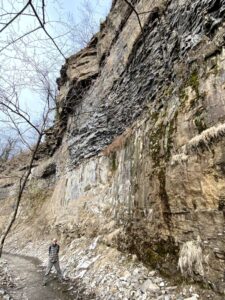
We left our home in Westchester County about 10 a.m. and stopped at about 2 p.m. at Buttermilk Falls, Ithaca, for a picnic lunch and a walk. A beautiful mini waterfall, foreshadowing the big one to come.

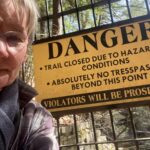
In past years we’ve walked the Gorge Trail, spectacularly steep and close to the water. This time it was closed for workers, dangling from ropes, knocking off loose rocks. We walked the Rim Trail, not quite as spectacular but very pretty, with views of the gorge.

Worker dangling and knocking off rocks over Gorge Trail

Out of Ithaca we took a pretty route: Scenic Byway 89N along Cayuga Lake, west on Ernsberger Road (Rte 128) and north on 96, through farmland and vineyards, through the historic town of Waterloo, the “Birthplace of Memorial Day.” The first Memorial Day was observed there in 1865 for the Civil War dead, and in 1966, the U.S. Congress, by resolution, officially recognized Waterloo as the birthplace of the national holiday. Read all about it here. After Waterloo, we enjoyed more of scenic 96, traveling northwest to I-90, not so scenic for the rest of the way to Niagara Falls.

Okay, this is strange. Whenever I hear “Niagara Falls” the Three Stooges pop into my head. Their routine must’ve made an impression on this little girl in the fifties. If you’re curious, here’s the YouTube link.

We arrived in Niagara Falls at dusk and checked into The Red Coach Inn, a historic bed and breakfast hotel. Highly recommended! Located in Niagara Falls State Park, you can walk to everything worth seeing. The place is a hundred years old, with solid vintage furniture, very well maintained. They advertise (accurately) a “warm English country ambiance,” along with the fact that Jim and Pam of the TV series “The Office” had their honeymoon there.

Every suite has a name. Ours was the Sheffield Suite with a view of the rapids. Had dinner in their restaurant both nights of our stay. Breakfast is included in the cost of the room, a REAL breakfast, anything on the restaurant menu. Delicious.

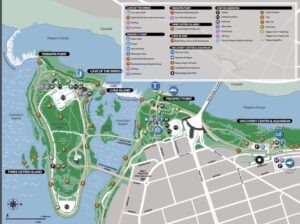
We spent a full day walking the entire park (I did get a few blisters—well worth it). The Observation Tower, Goat Island, Terrapin Point, Three Sisters Islands. Saw ruins from the Schoellkopf Power Station disaster of 1956. We also took the trails north of Rainbow Bridge as far as the ruins of the Niagara Falls Suspension Bridge, with a memorial to Harriet Tubman, noting that the Underground Railroad followed this route into Canada.

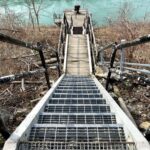
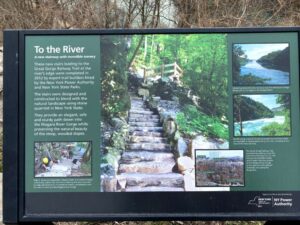
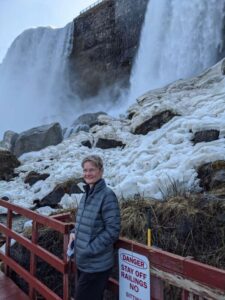
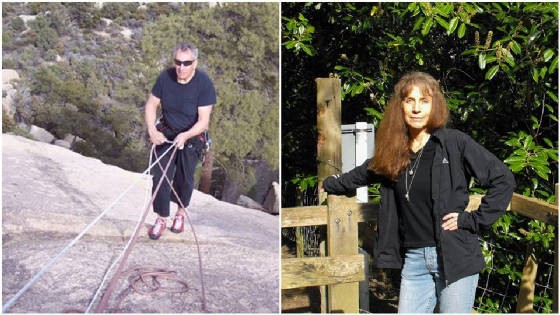
From the river basin up to the ridge, we climbed a stone stairway built by Tahawas Trails and others. Kevin built stone steps like this at Bear Mountain and other parks in our area when he worked for the New York/New Jersey Trail Conference. Here are some nice photos of Kevin in Niagara Falls.Kevin


You know what? Not nice for the economy but nice for us that tourism is so slow. No crowds, huge parking lots entirely empty, almost no one in the 50-stall restrooms. Look across the river at Canada and NO one. The Canadian side is built up with high rise hotels and amusements, all locked down. We are thankful that things are opening up here.

Our first day, Cave of the Winds was sold out (very few allowed down there due to distancing restrictions). We bought tickets and went the next morning, before leaving town. Felt like we were in Hitchcock’s The Birds, thousands of screeching seagulls. Winter ice hadn’t melted yet, and the formations were so interesting. Workers were replacing the wood steps and platforms. A worker there told us they do this EVERY year. All that water eats away at the boards.

On the way home, we took a very long, scenic drive on Rte 20 east. How could you miss out on blue lakes and sweet little towns with names like Skaneateles, Cazenovia, and Pompey (pronounced Pom-pee or Pom-pay?) Okay, the drive added a few too many hours, but we enjoyed most of it. After hitting the big city, Albany, we got on the Taconic State Parkway south the rest of the way, stopping off at exit 47B to have “dinner” (read that: ice cream) at Zoe’s Ice Cream Barn, Route 55, LaGrangeville. Moo!

Home again, back to days with Dana Hargrove on my screen. I’m about halfway through the sixth and last novel of the series. Stay tuned for further announcements!

A bird sitting with us at table in Niagara Falls


2020: Positivity and Perfect Vision

Perfect Vision

In 1989, the lure of big cash, fame, and glory, inspired me to write my first novel. The “Turner Tomorrow Fellowship Award” called for unpublished works of fiction on the theme of creative and positive solutions to global problems. Set in 2020, with an oh-so original title, Perfect Vision was to be my stunning debut novel, featuring a cast of fascinating, prescient characters who creatively avert a future dystopia. I gave it a happy ending. Sadly, however, Ted Turner passed on this masterpiece, cliches and all. The trash can wasn’t so picky.

Accentuate the Positive

Now, as we say goodbye to the actual 2020, I’m giving the final page a happy ending. “You’ve got to accentuate the positive, eliminate the negative,” Bing would sing. I hope you’ve been cheered by at least a few positives this year. Here are mine.

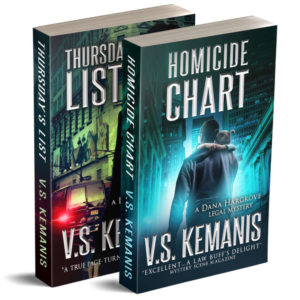
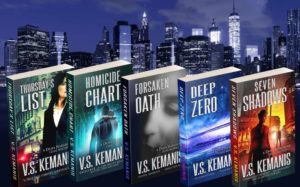
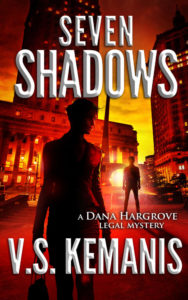
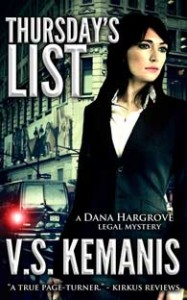
The year started out great with the January launch of Seven Shadows and two sets of Dana Hargrove Doubles on Kindle Unlimited: Thursday’s List & Homicide Chart and Forsaken Oath & Deep Zero.

My writing brain took a while to refocus, but now I’m well into a draft of the sixth, and final, Dana Hargrove novel. Title to be announced! I’m also working on a new story collection.

In February, before the pandemic hit, we had a fantastic road trip through Southern states. Click on my travelogue for all the highlights: routes, sights, events, food, and more.

Social Distancing = More Socializing

Say what? This year has seen more frequent socializing—but of a different kind—with neighbors, friends, and family.

Used to be that the only breathing creatures out for a walk on our quiet cul-de-sac were the deer and squirrels. That changed with homeschooling and work at home. Now everybody needs to get out for a little fresh air and a walk. We’ve had many socially distanced conversations with our wonderful neighbors, and during the warm months, even had a few happy hour gatherings in the turnaround at the end of our cul-de-sac.

Speaking of walks, we are blessed with many beautiful nature trails in the area, and it’s been nice to see more families out together walking. One day, I was surprised to hear a lone saxophone player in the woods. Click here to go to my Instagram post to hear the beautiful sound.

We’re all Zooming, of course, and this has meant more interaction on screen with my children, siblings, and other family members who do not live nearby (why didn’t we always do this?) My longstanding book group of close friends, the Lit Chicks, have had more meetings online than ever before, and I found a new online book group full of smart, insightful fiction lovers, Books and Bars. Great books and intelligent conversation!

Dance, Dance, Dance

Virtual dance classes at home make it easier to get to class! Kevin installed a beautiful wood floor in our sunroom this spring, giving ample space to take class and teach class.

Wasn’t so easy, figuring out camera angle, sound, and virtual teaching techniques, mirroring and saying “left” when I’m on my right. A fun challenge. The sides of my brain may be permanently switched. To my dedicated group of adult dancers at Scarsdale Ballet Studio: thank you! It’s been wonderful teaching you ballet and jazz and watching you dance on my screen.

Not having to deal with driving or riding the train long distances has made it easier to take classes I would not otherwise get to. Big thanks to all the wonderful ballet and contemporary dance artists whose classes I’ve taken this year: Christian Claessens, Igal Perry, Nina Goldman, Tanner Schwartz, David Fernandez, Tobin Eason, Noriko Hara, Kate Loh, Nancy Bielski, Teresa Perez Ceccon, Diane McCarthy, Laurie DeVito, Jana Hicks, Tyrone Monroe, and Johanna Bergfelt.

And so ends another year, with great things to look forward to in 2021. I’m grateful for my health and the health of my family. Yesterday, December 30, Kevin and I celebrated our 32nd wedding anniversary.

Here’s wishing you a Happy and Healthy New Year full of laughter, dance, fiction, and fun.

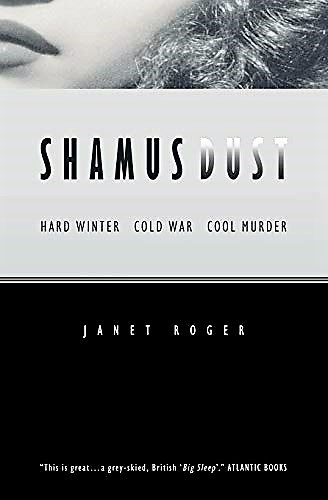
Book Review: Janet Roger’s Shamus Dust


Excuse me while I teleport back to New York of April 2020, into this surreal mix of pandemic grief and lockdown amid a gently emergent spring, pink blossoms and fragrant air. My transport is experiencing delay. I’m still walking the streets of war-ravaged London, Christmas 1947, where the foundations of bombed-out buildings, under a light frosting of snow, suggest the outlines of ancient Roman ruins—the key to a puzzling series of murders.

Give me another sec. Almost here, still a bit there. Let me knock back the last tumbler of gin and crush out my red lipstick-stained cigarette. Unfiltered.


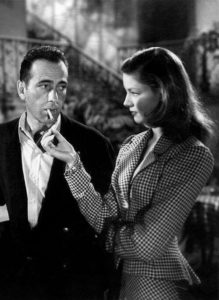
Janet Roger is to blame. Her debut novel, Shamus Dust, pulled me in and keeps running like a 40s black-and-white film noir on the brain.


I’m no fan of categories and hesitate to apply a label or “genre” to this work of art. Hard-boiled, gritty, and atmospheric, yes, but also poetic and literary. Roger confesses a Raymond Chandler influence, and the similarities are evident, but her prose isn’t as spare and tough when she’s in the mood to embellish. There are moments when this book is purely about the writing. While some reviewers say that it takes them out of the story, this lover of language found it right up her alley. More on that later.

The story is told from the point of view of an American private investigator called Newman, or Mr. Newman—a man who possibly lacks a first name. An insightful interpreter of human frailties and dark motives, Newman moves in a world of distinctive characters from every stratum of society. By the end of the book, the upper crust is looking seedier and far less heroic than the inhabitants of London’s underbelly. Roger has created a large cast of characters, gradually dropping tidbits to reveal their back stories and relationships. To mention a few: Councilman, archaeologist, entrepreneur, architect, lawyer, medical examiner, police commissioner, detective inspector, nurse, barber, haberdasher, pimp/blackmailer, various prostitutes, and a homeless shell-shocked WWII vet. Add several murders, a rotating field of suspects, a complex web of clues, and you’ve got one hell of a novel, with an ending you won’t see coming.

Shamus Dust is not a beach read or superficial entertainment to pick up when you’re mildly distracted. You’ll need to take this one slowly to savor the language, its sophistication, wit, irony, unique metaphors, and turns of phrase. You’ll need time to ponder the complexity of the plot. The author honors the reader’s intelligence, never overstates, poses one intriguing puzzle after another. She follows Newman through London without revealing what he’s up to in a scene until, several pages on, the reader is allowed to discover the meaning of the interaction. There are many of these “ah-ha” moments, opportunities to marvel at the cleverly interlacing intricacies.

The writing style. The word choices. Here are just a few.

Physical descriptions that instantly evoke an image:

“The kind of room where you’re meant to sit at night in a cravat and a quilted robe reading Kipling by firelight until the Madeira runs out.”

A woman with a “mouth that made the fall of dark-red hair look incidental.”

“Littomy’s nose was built for a profile on old coins.”

A man’s “hair shone in flat stripes across the dome of his head, where you could count them if conversation ran thin.”

At a party attended by the one percent, a young scion is “wearing black-tie as if he’d been weaned in it.”

Chandleresque:

A volatile thug looks like “he could hurt a man and enjoy the work.”

Witty dialogue:

The butler to a sloshed hostess asks Newman what he would like to drink. He replies, “Not a thing. Mrs. Willard will be taking cocktails for both of us.”

And how are these lines for poetry?:

“Night was crawling in a deep, wet hole.”

“She put a hand flat against my chest and her gaze dipped back in an ocean, then surfaced again, dripping its dark purple lights.”

“He looked wild-eyed around a room so hushed you could hear him blink away the tears.”

The book opens with one of my favorite, longer passages. Newman says he has never had trouble falling asleep and “sleeping like the dead” until now:

 “Lately, I’d lost the gift. As simple as that. Had reacquainted with nights when sleep stands in shrouds and shifts its weight in corner shadows, unreachable. You hear the rustle of its skirts, wait long hours on the small, brittle rumors of first light, and know that when finally they arrive they will be the sounds that fluting angels make. It was five-thirty, the ragged end of a white night, desolate as a platform before dawn when the milk train clatters through and a guard tolls the names of places you never were or ever hope to be. I was waiting on the fluting angels when the telephone rang.”

Wow. Any insomniac (namely, me) can relate.

Now, don’t you want to read something like this? I may teleport back there now.

Discovering America Travelogue (4) — February 2020


I started writing this travelogue a month ago. Now, as we shelter in to flatten the curve, the crowded restaurants and traffic jams mentioned in this post are from a past world. Let’s hope we’re all on the move again soon.


What do Charlotte, Atlanta, Naples, Savannah, and Washington D.C. have in common? They were all stops on our latest mileage consumption, February 13-25. Twelve days of great discoveries.

First leg, New York to Charlotte, N.C., mostly on I-81. Back roads are nice, but if you must take an interstate, I-81 is quite scenic, especially in the rolling hill country of West Virginia.

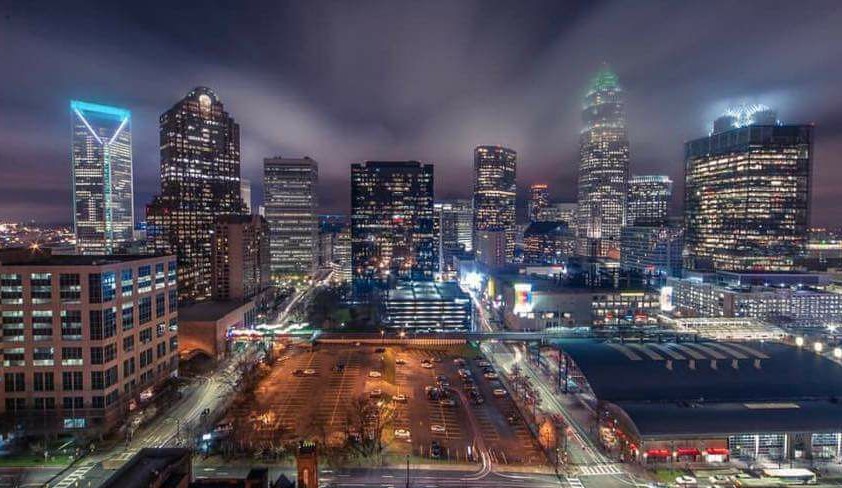
Charlotte is a sizable city with a small-town feel. The skyscrapers are beautifully lit at night.
We enjoyed dinner at Duckworth’s (I’ve never seen so many beer pulls and TV screens), where the waiter carded me when I ordered a glass of wine. Yes, you say, that’s because I don’t look a day over 20. (Has nothing to do with Duckworth’s carding policy.)
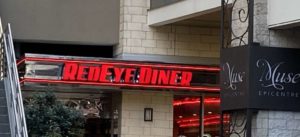
The next morning we had breakfast at the Red Eye Diner, where the motto is: “Life is Short. Eat Great Food and Have Fun.”
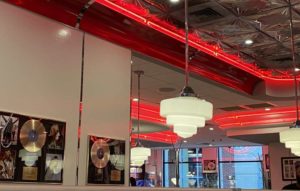
At the Red Eye, you’ll enjoy your comfort food surrounded by iconic photos and souvenirs of rock ’n roll legends.

Then, on to Atlanta, mostly on I-85, where entry into peach country is marked by the tall “Peachoid” water tower in Gaffney, South Carolina.

By late afternoon, we settled into our Airbnb apartment on Peachtree Street NE, then headed to the Cumberland Mall for dinner. It has tons of restaurants and is close to the Cobb Energy Performing Arts Center, where we had tickets for the Atlanta Ballet. Got there, and oops, little did we know that 99% of Atlanta descends on the Mall for Saturday dinner. After circling like raptors, sheer luck got us a spot in the outer reaches of the enormous parking lot. Our trek began. A sea of shimmering cars, inquiries at half a dozen restaurants, all with an hour wait. Time to pull out our tried-and-true strategy. The trick is to spy a couple of empty seats at the bar and waltz past the crush of people at the door. We did this (with the hostess’s blessing) at Ted’s Montana Grill and had a delicious dinner. Seats at the bar can be just as comfortable as a table and far more interesting: You get to watch the bartenders at work.

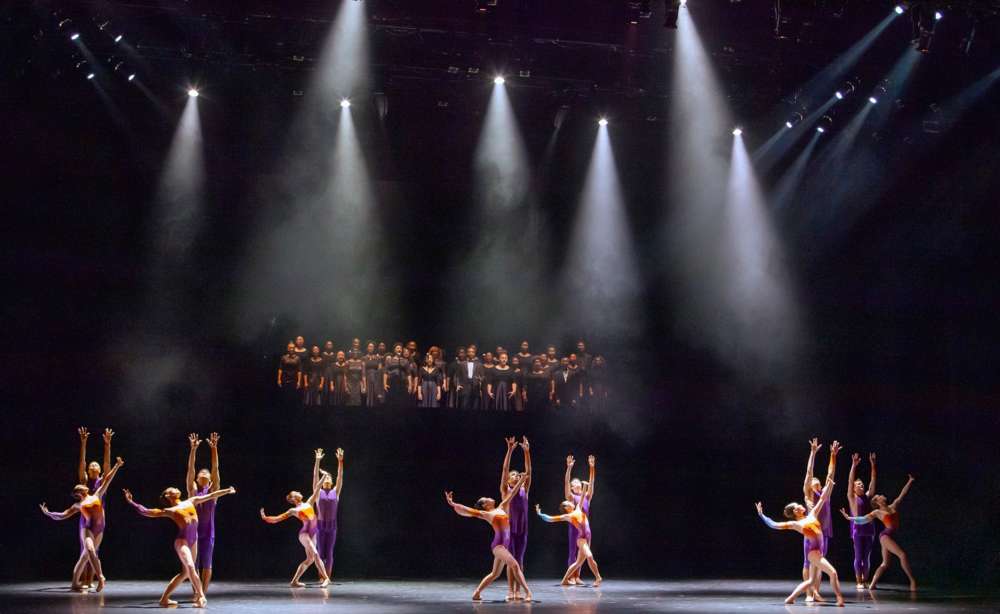
The Atlanta Ballet was simply excellent. We saw “Elemental Brubeck” (delightful choreo by Lar Lubovitch, music by Dave Brubeck), “Tuplet” (unique, contemporary, surprising, and funny choreo by Alexander Ekman, music and sound by Mikael Karlsson), and “Sunrise Divine” (contemporary ballet Complexions-style by Dwight Rhoden, arrangement and original music by Dr. Kevin P. Johnson, awesome live gospel performance by the Spelman College Glee Club). And (reality check), at the Cobb Center (unlike Lincoln Center), there are no lines for the ladies’ room at intermission. I commend the architect.
The next day, Sunday, was rainy and cold (45-50˚), not the best for outdoor sightseeing. We started the morning with toasted bagel and coffee at Einstein Bros. Bagels (a favorite of ours when on the road!), and went to the Atlanta History Center. Really interesting. A refresher course on the Civil War, Reconstruction, and the U.S. Supreme Court’s abysmal opinions, 1870s to 1950s, which gutted the early Civil Rights Act and the Equal Protection Clause. Here is a good historical summary of Court decisions on civil rights.
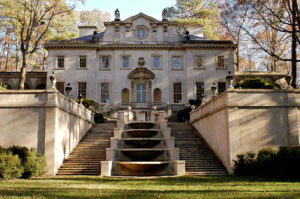
On the museum grounds, we visited the historic Swan House, maintained in the style of a wealthy Atlanta family in the 1930s. My favorite room was the kitchen.

Later that afternoon, my husband gave in to my repeated demands to see the Georgia Aquarium. Once we were there, he had to agree—fish are fine entertainment. They come in an amazing variety of shapes, sizes, and colors, and appear to be just as happy in those large tanks as they would be in their natural habitats, unlike caged and restless zoo animals that stir up your guilt feelings.

Here is the cool place where they swim on top and all around you.

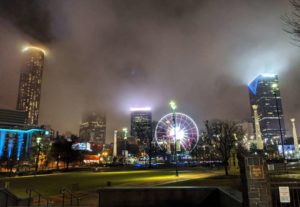
The Aquarium is in Centennial Olympic Park where the 1996 Summer Olympic Games were held. By the time we finished with the fish it was dinnertime, so we walked across the park to Ruth Chris’s Steakhouse.

A chilly night, but the fog, obscuring parts of the buildings, was very beautiful.
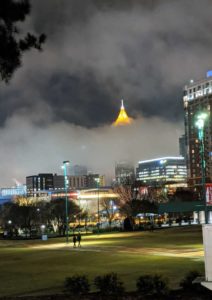
 

The huge restaurant was half empty, but they still denied us a table. “Reservation only.” (Did we look that bad?) The real reason seemed to be the limited staff for a Sunday. So, again, we grabbed seats at the bar and had a delicious dinner. The best steak I’ve ever eaten. No kidding.


While packing the next morning, I narrowly escaped death from a hidden hazard in our Airbnb: a huge picture came crashing down. Only after the crash did we see that it had not been fastened to the wall but merely propped on a table.
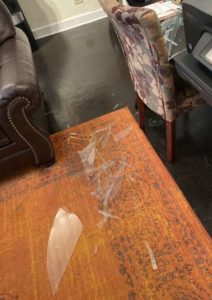
I was so unnerved that I left my travel buddy behind on the bed—not my husband, my favorite memory-foam pillow. A hundred miles down I-75, I noticed the loss. At our next stop, Brooksville FL, I bought another pillow at a Bed Bath and Beyond, and then we had dinner at Carrabba’s Italian Grill. The food was good, but the service somewhat hilarious. The very young, eager-to-please waitperson was so intent on delivering her rehearsed lines that she was deaf to our needs. For example, “Take your time,” was her cheerful directive upon delivering the check as she swept away, with a smile, our coffee and pie, only half-consumed and still desired.
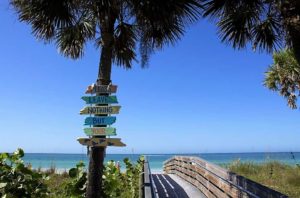
The next morning, we started the last leg to Naples, taking a scenic route. At Tampa, we took I-275 across the bay, picked up to-go lunch at a Publix, and went to Indian Rocks Beach to eat. Finally some warmth after the chilly temperatures in Charlotte and Atlanta! After lunch, I couldn’t resist a stop for ice cream at Tropical Ice Cream & Coffee, on Gulf Blvd. Highly recommended!

 

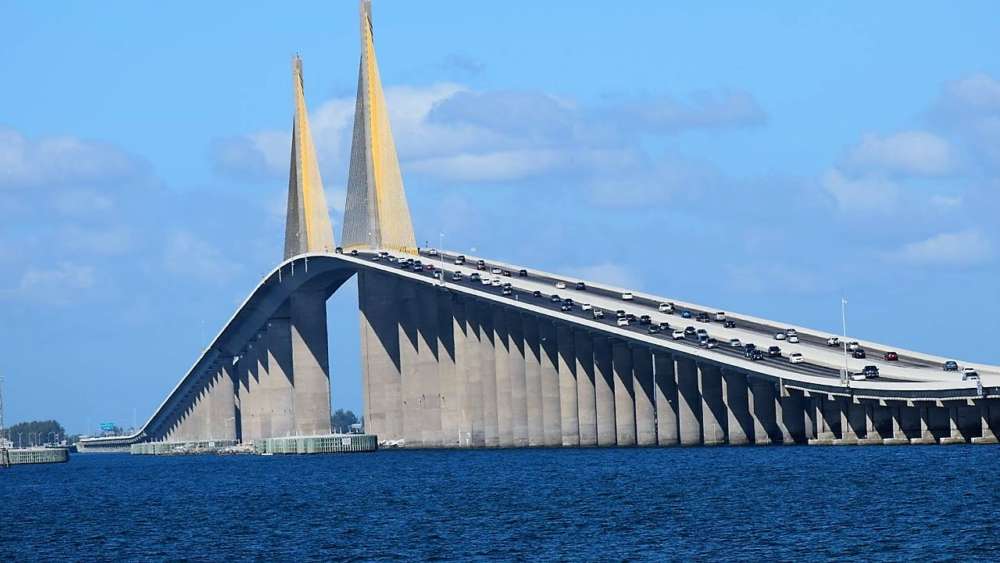
Then, down the peninsula on Routes 699 and 19, through the resort beach towns, to St. Petersburg and onto the amazing Sunshine Skyway Bridge, I-275. Spectacular. Later, I Wikipediaed the Skyway and learned of the disaster in 1980, when a freighter slammed into the southbound span of the old bridge, causing its collapse, killing 35. They used the northbound span until the new bridge opened in 1987, and kept a small section of the old bridge for a fishing pier.
Got to Naples and spent three gorgeous days of sunny weather, 80-85˚, much better than our trip in January 2019, when it was unpleasantly cold and rainy. Naples isn’t new to us, a place to visit family, to have good times, great food and conversation either at home or on the beach or by the pool. A new experience this trip was a pleasant boat ride on the Gordon River at the Conservancy of Southwest Florida. Our boat captain/tour guide, who may have been 101 years old, was very knowledgeable about the mangroves and wildlife. I was only mildly nervous about his navigating abilities.
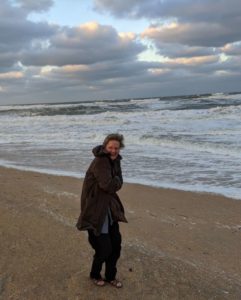
On Friday, Feb 21, we left Naples and drove to St. Augustine, arriving about 6 p.m., after construction and traffic jams around Orlando. Goodbye warm weather. Freezing and windy! We crossed the Tolomato River on the Francis and Mary Usina Bridge from St. Augustine to Vilano Beach. Do I look like I’m having fun?

As you might guess, our “walk” on the beach lasted two minutes. I’d like to visit the beautiful Vilano Beach again someday—when it’s warm.

We had a nice dinner at 180 Vilano Grill (seafood for me, pizza for Kevin). The food was delish, but we were seated in the last available booth, directly across from the bathroom door, which I kept closing when people left it open. Our tendency to choose crowded restaurants must be a sign of our instinct for finding the best ones!

That night, we stayed at the Hampton Inn & Suites in Vilano Beach, where dozens of ladies wearing pirate hats were having a convention, eating pizza and salad in the lobby and ballroom. Our room was very nice, but gave us an unpleasant surprise. As usual, I got out of bed in the middle of the night, not bothering to turn on the lights. Too blinding. Then, very strange. Was I dreaming? In the dark bathroom, I padded through a thin layer of water. There’d been a slow leak in a pipe under the sink. The bottom of my PJs got wet. Luckily, I had another pair.

The next day, Saturday Feb 22, we left St. Augustine and drove north on Route 1, a nice wide parkway (part of the “Dixie Highway”) Near Jacksonville, we took I-295 over the St. Johns River on another impressive cable bridge, the Dames Point Bridge (officially the Napoleon Bonaparte Broward Bridge).
About 2 o’clock we stopped in Savannah GA for lunch. The historic district was hopping with live music and people shamelessly imbibing on the streets, already half drunk. Then it dawned on us, oh, yeah, this is the weekend before Mardi Gras (either that, or Savannah is a 24/7 party town). Drinking and carousing didn’t appeal to us, so we got in line for a table at Vinny Van Go-Go’s Pizza. Yes, another crowded restaurant. The pizza was pretty good. Cash only! Not many places like that are still around. Luckily, we had the cash, and not much was needed. Conveniently next door was a fabulous ice cream place, Savannah’s Candy Kitchen. As you might guess, I was not about to resist.
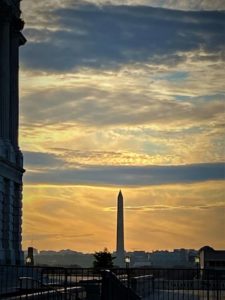
Thus refreshed, we drove to our next stop, Fayetteville NC, for an overnight rest before completing the drive to Washington D.C. The next day on I-95, there was an accident near Richmond VA, and the Google lady told us to take exit 104 to US 301. A lovely detour. We enjoyed this nice little highway with cows and farms and hills before getting into D.C., late afternoon. Checked into the Washington Court Hotel on New Jersey Avenue. Comfortable and very convenient to the Mall. After a stroll at sunset, we had a lovely dinner at the bistro in the hotel.

Monday February 24, legislators were back at work after their Presidents’ Week break. We went to Kirstin Gillibrand’s office in the Russell Senate Office building, and an intern gave us passes to the House and Senate Galleries. The Russell building, like all the government buildings we visited, is fitted with opulent amounts of marble, hallways as wide as two-lane highways, and ceilings 20 feet above our heads. Grand and beautiful, with its implicit statement of lofty purpose, but undoubtedly a fortune in tax dollars to heat, cool, and maintain.

Our next stop was Congress, where nothing was happening. We saw the empty House chamber and decided to return at 3 p.m., when the Senate would be in session. We walked past the U.S. Supreme Court, where oral argument was underway in the case of U.S. Forest Service and Atlantic Coast Pipeline LLC v Cowpasture River Preservation Assn. At stake in this case (read here) is a permit for a right-of-way for a natural gas pipeline to tunnel 600 feet beneath the Appalachian Trail. Outside the Court were a few news reporters, demonstrators opposed to the pipeline, and a blocks-long line to get inside for a three-minute look at oral argument.
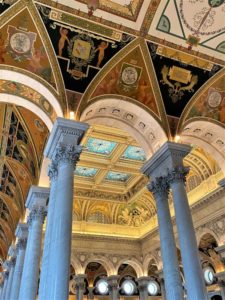
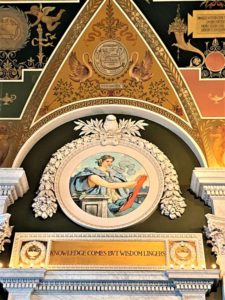
We declined the opportunity to spend hours in that line, instead going next door to the Library of Congress, resplendent with beautiful art and inspirational quotes on the walls, ceilings, lunettes. Here is one of the paintings of the ideals (all female, of course) Wisdom, Understanding, Knowledge, and Philosophy.
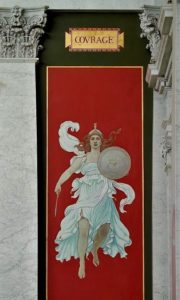
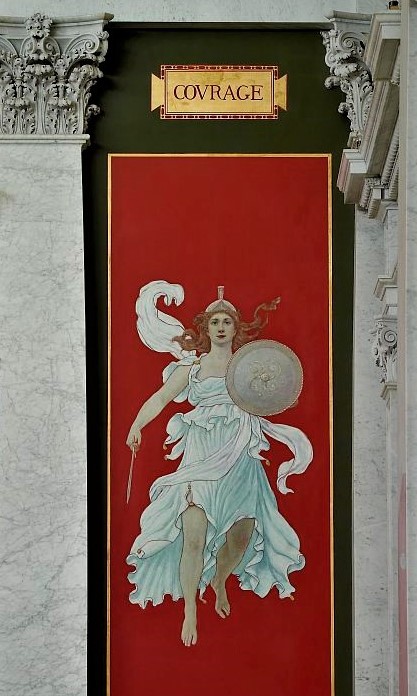
Another favorite of mine is the mural panel “Courage” by artist George Willoughby Maynard, not to be mistaken as COVERAGE, spelled with a typo. I suppose our desire to look erudite is the driving motivation behind adherence to the ancient Roman convention of using V’s instead of U’s.

The Library houses several interesting exhibits. We spent the most time in Exploring the Early Americas (read: Invading the Early Americas), with its interactive maps of indigenous peoples dealing with and defending against self-entitled Europeans.
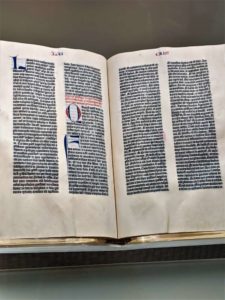
Here is the Gutenberg Bible, the first book printed from movable metal type in 1455.

We had lunch in the spacious 6th floor cafeteria in the James Madison Memorial Building. Tons of food choices, a wall of windows on the city, and swarms of government employees (giving me flashbacks of my lunch breaks in years gone by). We returned to the Supreme Court (oral argument now over), and sat in the courtroom, listening to an energetic former federal law clerk, who finished her lecture about the Court with a punchline: The highest court in the land is not the one we were sitting in but the one directly above us on a higher floor—a basketball court for the Justices and their staffs. Yours Truly, Esq., did not learn much of anything new from the lecture, but my curiosity was satisfied, seeing the space where important cases are heard. The magnificence of the courtroom does not outclass the beautiful New York appellate courts where I have argued and worked, the First and Second Department Appellate Divisions, respectively.
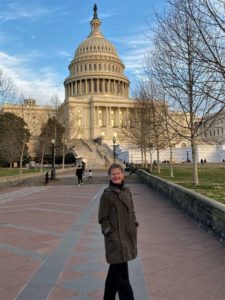
We were back on Capitol Hill at 2:30, hopefully in time for the pledge of allegiance and opening prayer at 3:00, but security took too long. When we tiptoed into the Senate gallery (balcony) at about 3:20, Senator Tammy Baldwin (D-Wisconsin) was standing at the podium, facing the empty chamber, reading a speech. We were mystified. Was this a rehearsal of some kind? All 100 seats were empty, each desk with a little white booklet in the middle. Behind Senator Baldwin sat the presiding officer (not VP Pence or President Pro Tempore Grassley but a designee). At the long desk in front of her sat a few officials (e.g. legislative clerk and secretary), and on the carpeted steps on the sides sat a dozen or more 16-year-old pages, eager for something to do. Occasionally, one would jump up and deliver a glass of water to the presiding officer, who seemed to need four or five cupsful during the speech. It was quite long.

Soon enough, it became clear that the speech was a relic of the past. I peeked over the shoulder of the woman sitting next to me, who was following along in one of those little white booklets. (How did we miss getting one of those?) It was President Washington’s Farewell Address from 1796. Later, I learned of the yearly Senate tradition, dating back to 1888, for a different Senator to deliver the Address during the week of Washington’s birthday. Perhaps it’s time to reconsider this tradition? We could save on printing costs for all those wasted little booklets. The Senators aren’t interested.

To give you a flavor, here is the opening paragraph-long sentence of Washington’s speech:

“The period for a new election of a citizen to administer the executive government of the United States being not far distant, and the time actually arrived when your thoughts must be employed in designating the person who is to be clothed with that important trust, it appears to me proper, especially as it may conduce to a more distinct expression of the public voice, that I should now apprise you of the resolution I have formed, to decline being considered among the number of those out of whom a choice is to be made.”

Translation: “I’m not running for a third term.”

Washington’s advice, designed to inspire and guide future generations (i.e. us), is to beware the forces of geographical sectionalism, political factionalism, and foreign influence as potentially undermining our national interest, our independence, and republican form of government. Here is Washington’s Farewell Address, just in case you are dying to read it.
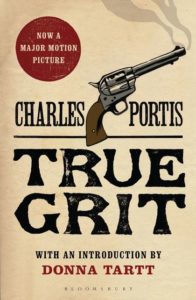
Still awake when the speech ended, we stuck around for another hour and saw several senators speak for about 10 minutes each. One by one, they addressed an empty chamber, as a stenographer stood nearby, typing on a steno machine hanging from her neck. Sen. McConnell recognized the career of retired Navy Adm. Joseph Maguire whose service as acting Director of National Intelligence “concluded last week” (read: he was replaced); Sen. Casey honored three people from Pennsylvania for Black History Month; Sen. Cornyn spoke in support of bills to prohibit abortions after 20 weeks and to protect babies born alive during late-term abortions; and Sen. Boozman spoke in support of a bill to improve delivery of veterans’ health care, then paid tribute to the author of True Grit, Charles Portis, who had just died in his home state of Arkansas. At the outset of each speech, the presiding officer granted, “without objection,” the senator’s request, stated differently by each, that “the quorum call be rescinded” or “be dispensed with” or “be vitiated.”

This experience disabused me of my impression that a quorum of senators is present in the chamber during speeches like this. If you watch Senate proceedings on TV, it’s not so obvious that no one is in the room. At about quarter after five we had to leave, not knowing that (found out later) the session went on until almost 8 p.m. You can watch the entire five hours here on CSpan.

We met our nephew at Reren Lamen & Bar for delicious Asian fusion cuisine and good conversation. The wall with the big green dragon is great background for selfies. The next morning was rainy and cold and we were all vacationed out. We abandoned our tentative plans for more touring and hit the road home.
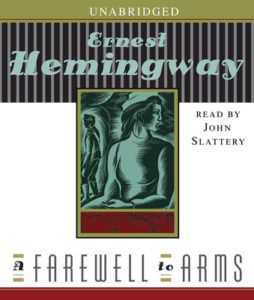
A final, very important note: With all those hours in the car, audiobooks are essential. We listened to two. On the way to Florida, it was The Accident by Chris Pavone, about an anonymous manuscript that contains a dark secret about a powerful mogul and the various people who get murdered for trying to publish or profit from it. Entertaining for a car trip, but I found Pavone’s first novel, The Expats, a better thriller. On the way home we listened to the classic, A Farewell to Arms by Ernest Hemingway. I highly recommend this audiobook, read by John Slattery, who brings the characters alive with his excellent narration.

Yes, this has been a long blog post, something to fill up the stay-at-home-itis. Congratulations are due anyone reading this to the end. Email me for your free prize, an e-book of your choice!

Let’s hope we’ll all be traveling and dining out again soon. Stay safe and healthy.

 

Are you on Kindle Unlimited?

Dear KU Subscribers,

I’m posting this quick note to let you know that the first four Dana Hargrove novels are available on Kindle Unlimited.

Thursday’s List and Homicide Chart:

If you’re not on KU, you can purchase these “Dana Hargrove Doubles” in e-book for much less than buying them separately. Here’s Forsaken Oath and Deep Zero:

It’s been such a pleasure to distribute the Dana Hargrove novels in the most affordable format, introducing them to a new wave of fiction lovers. Since their release in mid-January, readers have been devouring the pages and leaving such wonderful reviews and feedback. And the Dana Hargrove Doubles are a good way to get the full experience of Dana’s world, from the time of her rookie days in Thursday’s List through her days as an elected D.A. in Deep Zero, before you pick up and read her latest story, Seven Shadows.

Thank you, Readers!


Reflections on Launch Day

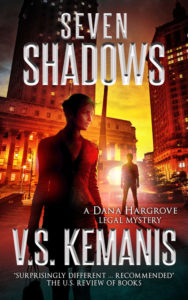
Today, Seven Shadows goes live.

Little did I suspect that Dana Hargrove would be hanging around this long. I wrote the first draft of Thursday’s List in the mid-nineties, during a period of stay-at-home momming after years of working a big investigation at the NY State Organized Crime Task Force. Dana was born but didn’t see a bookshelf until 2013. In the years since, her world keeps growing—a web of fascinating cases, intriguing colleagues, complex adversaries, and family dramas.

Here are Dana’s stories and the years in which they take place: Thursday’s List (1988), Homicide Chart (1994), Forsaken Oath (2001), Deep Zero (2009), and Seven Shadows (2015). The sixth novel, planned for 2022, will bring Dana into the present. As for the time gaps between the stories, one reviewer calls this “a bold strategy to show how much a lawyer can change over the course of her career” (Kirkus Reviews). I call it, simply, interesting and fun.

In a lifetime, the delicate balance between career and family is in perpetual flux, just as societal views and hot button issues in criminal justice are ever evolving. In Seven Shadows, Dana returns as a trial judge, in midlife, dealing with the empty nest at home as she weighs her views on incarceration, now that she wields the power of the gavel. She’s conflicted over a tough sentencing decision in a high-stakes murder case when an unpleasant past comes calling. Who is lurking in the shadows?

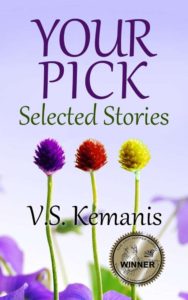
Ask your favorite independent bookstore and lending library to order the Dana Hargrove books and Your Pick: Selected Stories (2019 Eric Hoffer Award, Best Story Collection) from Ingram ipage. If you happen to be a Kindle Unlimited subscriber, the first four Dana Hargrove novels are now free on Amazon (Dana Double 1; Dana Double 2). Please help spread the word!


A special note to fellow authors, reviewers, and bloggers:

If you’d like a free review copy in e-book or paper, please email a request through my contact page. I’d love to get your feedback. You may find the ending of Seven Shadows, as one reviewer put it, “Surprisingly different” (“Recommended” by The U.S. Review of Books).

You will also find this on a page near the end:

“All works published by Opus Nine Books are dedicated to the nine members of the family headed by John and Kate Swackhamer at 3 South Trail, Orinda, California — a large world under one small roof.”

Thanks for reading!


Crime Cafe Podcast and a Giveaway!

Seven Shadows

In celebration of my upcoming new release, Seven Shadows, I’m giving away seven copies of my first Dana Hargrove novel, Thursday’s List. To enter, click here for details!

Thursday’s List is where it all started for Dana. The novel takes place in 1988, when Dana was a mere fledgling, 26 years old, with a promising legal career ahead of her. Each standalone novel in the series skips several years, finding Dana at distinct stages of her personal life and career. Seven Shadows takes place in 2015. Dana is 53, a respected trial judge and now, more than ever, controversial cases throw the judge into dilemmas of conscience, and people from her past reappear, threatening Dana and her family.

After writing five novels featuring this dynamic woman, I am fully immersed in her life and have grown close to her family members, friends, and colleagues. My alternate reality!

Readers of mystery, suspense, thriller, and crime fiction will love author Debbi Mack‘s podcast, Crime Cafe. She has interviewed dozens of authors, and chances are, your favorites are among them. You can find links on her website. I enjoyed talking with Debbi recently about the Dana Hargrove novels and my experience in the law. Debbi and I have much in common, as fellow attorneys who write legal thrillers. Click here to listen to the podcast!

COMING JANUARY 28, 2020: A New Legal Thriller!

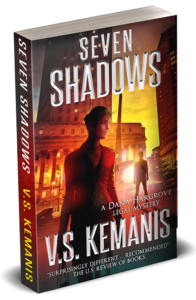
Seven Shadows

Excited to announce the fifth Dana Hargrove book, coming soon! From the back cover:

“Red lights flash and alarms sound in his head. It’s ecstasy, making the almighty judge cringe, reducing her to a state of helplessness. Almost too much for him. It’s what he’s been craving. It’s what he wants right now, more and more of it, until she’s on her knees, begging.” from Seven Shadows

A criminal prosecutor is bound to make a few enemies over a decades-long career, and Dana Hargrove is no exception. Who has it in for her?

In 2015, the former prosecutor is in her second year as a trial judge in Manhattan. It’s a new world. Dana cut her baby teeth in the DA’s office during the crack epidemic, the ’80s and early ’90s. Now, the murder rate is a fraction of what it was, and public opinion about incarceration is softening. So is Dana. As a judge, she agonizes over every sentencing decision before her.

Midlife has also hit Dana hard on a personal level. She misses her children and adjusts to the empty nest by immersing herself in work. Instead of growing closer to her husband Evan, their relationship becomes strained. What is happening to them?

Tension builds as Judge Hargrove presides over two high-stakes media cases. The defendants: a glamorous dot-com millionaire who killed her business partner, and an orthopedist who runs a deadly pill mill. In the public mail bag, the judge receives a message from an anonymous crank. Then her family starts getting letters that sound all too personal. Someone with an agenda is harassing and shadowing Dana and her loved ones.

In Seven Shadows, the fifth standalone novel of the series, the judge and her pursuer are on a collision course meant to teach Dana the meaning of empathy and the value of the people she cherishes most.

Stay tuned for pre-order date!

Celebration! Birthday thoughts, mystery & suspense stories, cover reveal


It’s my birthday! Thanks so much for joining me in the celebration.

Is this a milestone of sorts? I’m not allowing the number and its associated labels to mess with my head. Today is another day full of wonder, delight, and possibility.

A day for reflection, to be grateful for a loving family, close friends, sound health, and the good fortune to be living in a time and place that affords women the freedom to work in artistic and intellectually stimulating fields. For me, that means law, fiction writing, and dance. Not necessary in that order and sometimes simultaneously!
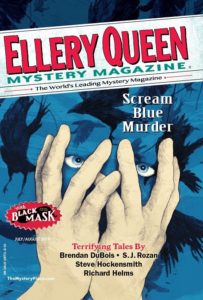
Today, I’ll write about writing. So far, 2019 is a banner year for short fiction, both solo works and collaborations with gifted writers and editors. If you’re more interested in novels, stick around until the end of this article for news about my next novel and a cover reveal!

mystery and suspense storiesDzintra’s Tale,” now in the July/August issue of Ellery Queen Mystery Magazine, was inspired by experiences of my late father and late aunt during their exodus from Latvia in 1944 and subsequent years as displaced persons. Click here to read more on the blog Something Is Going To Happen, where I give some of my family’s history and the way it triggered my imagination in writing the fictional story “Dzintra’s Tale.” To readers who have been moved by the story enough to contact me directly, I thank you for sharing your personal stories of friends and family from the Baltics and WWII DPs.

The July/August EQMM issue includes stories by these fine writers, with whom I’m proud to share the pages (click on any name to learn more): Vicki Weisfeld, Richard Helms, S.J. Rozan, Trey Dowell, Michael Bracken, Marilyn Todd, Aoife Clifford, Peter Turnbull, Chris Holm, Brendan DuBois, Twist Phelan, Steven Hockensmith, R.T. Raichev, Takemaru Abiko, Tara Laskowski, Tony Fisher, and James Hadley Griffin. Thank you to editor Janet Hutchings and associate editor Jackie Sherbow of EQMM.

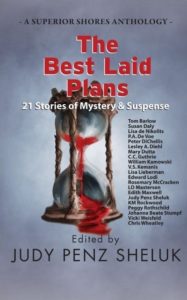
mystery and suspense storiesReleased in June, the anthology The Best Laid Plans, 21 Stories of Mystery and Suspense, includes my story “Sucker Punch.” I’ve lightened up on this one—just have fun with it!  In this diverse collection, each writer offers a unique twist on the theme suggested by the anthology title. Here are a few that really grabbed me: P.A. DaVoe’s “Gambling Against Fate” features a 14th century murder investigation with fascinating details about the legal system of the Ming dynasty, and Edith Maxwell’s characters in “The Stonecutter” are so well drawn I was fully immersed in their tale.

They’re all great. For no-spoiler summaries of all 21 stories, click here to check out Kevin Tipple’s review. And click on any name to learn more about the authors in this anthology: Tom Barlow, Susan Daly, Lisa de Nikolits, Peter DiChellis, Lesley A. Diehl, Mary Dutta, C.C. Guthrie, William Kamowski, Lisa Lieberman, Edward Lodi, Rosemary McCracken, LD Masterson, KM Rockwood, Peggy Rothschild, Johanna Beate Stumpf, Vicki Weisfeld, and Chris Wheatley. A big thank you to Superior Shores Press and editor Judy Penz Sheluk, who also contributed a story.

mystery and suspense storiesComing in September from Level Best Books, the anthology Me Too Short Stories, Crimes Against Women, Tales of Retribution and Healing. In my story, “No Outlet,” a woman haunted by memories of a long-ago crime is spurred into action on behalf of a younger woman in trouble. Here is what editor Elizabeth Zelvin wrote in her announcement of the anthology:
“What do women want? A voice. To be heard. Respect. To be believed. Justice. To be both safe and free. The women and children in these stories use the means at hand to protect themselves and those they love… These women are neither femmes fatales nor throwaway victims, nor are they the tough-talking, gunslinging superheroines at the shallow end of crime fiction. These stories, written by women, are about women and girls as strong, as vulnerable, and as varied as their counterparts in real life… In this anthology, you will hear their voices.”

In addition to yours truly, here are the voices you will hear (click on names to learn more): Lynn Hesse, Rona Bell, Ana Brazil, Ann Rawson, C.C. Guthrie, Carole Sojka, Dayle A. Dermatis, Diana Catt, Eve Fisher, Ginn Gannon, Julia Buckley, Julia Pomeroy, Madeline McEwen, and editor Elizabeth Zelvin.

Save the date! The launch party happens on the evening of Tuesday, September 24, 2019, at The Mysterious Bookshop, 58 Warren Street, New York City. Even if you can’t make this date, New Yorkers, be sure to visit The Mysterious Bookshop when you get a chance. It’s an amazing store! [Dancer friends, the store is only a few blocks from Gibney Dance!]literary, mystery, and suspense stories

Now, here is a big thrill I got in May. My collection Your Pick: Selected Stories, won the Eric Hoffer Award for Best Short Story Collection, and was also a Finalist for the Montaigne Medal. Your Pick benefits from the input of my readers over the years. Your comments and reviews helped me select the most-loved stories from my previous collections.


Last but not least: A Cover Reveal!

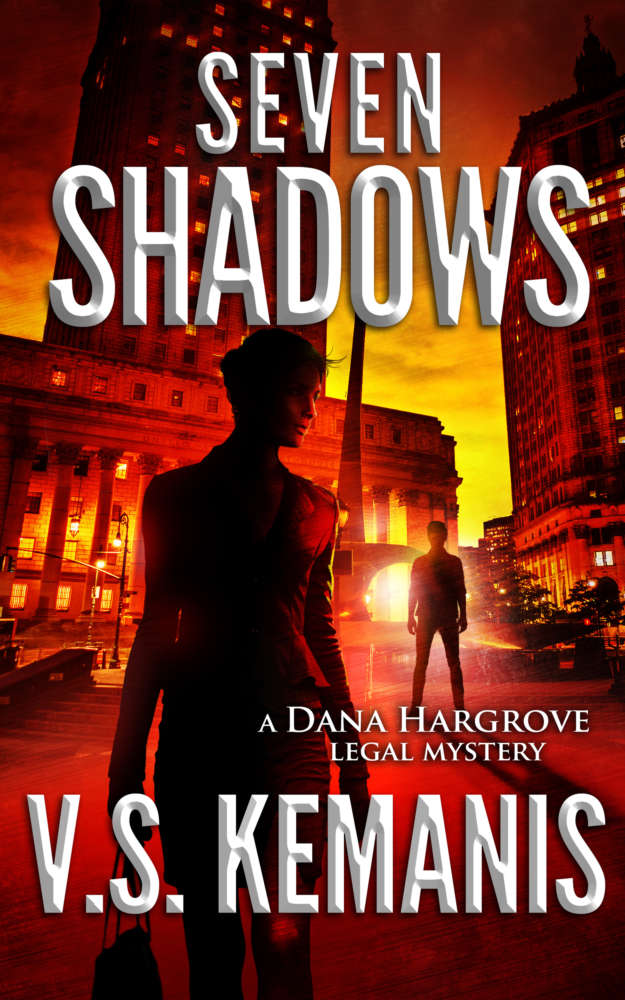
Coming January 2020, Seven Shadows, the fifth Dana Hargrove novel.

Isn’t this cover riveting? Kudos to my cover artist, Roy Migabon.


mystery and suspense cover reveal

In Seven Shadows, former prosecutor Dana Hargrove, now a trial judge in Manhattan, is presiding over a high stakes media case when strange things start to happen. Is someone watching her? In the fifth standalone suspense novel of the series, Dana and her family scramble to find out who is lurking in the shadows—before it’s too late.

If you are a blogger or reviewer, please contact me to request an advance reader copy. ARCs will be available in October! Woohoo!

Now, back to “work.” Even on my birthday. “Imagination is my refuge, conception and creation my delights.”

Thanks for reading.

[Attaching here #64Selfie. Didn’t get around to taking the #65Selfie yet.]

Travelogue (3): Road Trip to Montréal

Time for another road trip, and boy, this one was splendid! A trip to Montréal, My New Favorite City!

Friday, June 28 — Friday July 5, 2019

TRANSPORTATION, MOVING, & PARKING: MORE FUN THAN YOU MIGHT THINK

A six-hour drive from our home in Cortlandt Manor, New York, got us there early Friday evening. Our Airbnb apartment was on Rue Saint André, an excellent location close to everything. [The actual accommodations were not 5-star, however, but we made do!]

The street was torn up for water main repair and we had to park (temporarily and illegally) a block away to unpack. Oddly, as we made multiple trips hauling our stuff from the car, we blended in well with the local residents because—what’s this? Why is half the neighborhood moving? Everywhere, people were carrying boxes and sofas and mattresses and TVs out of their apartments.

We learned later that this was Moving Day! (actually, Moving Weekend). Originally by law, and now by tradition, virtually every lease in Montréal starts on July 1. Whoa! When this got started, they forgot it was also Canada Day. Click here for a complete explanation.

That evening, we found a garage to park the car (very affordable and beautiful) Gare d’ Autocars de Montréal on Rue Berri, under the Greyhound bus station. After that, we took the Metro or walked everywhere the whole week.

For you Beatles fans who are taking or have ever taken the Montréal Metro, I ask you this: After the ride, do you find yourself humming “Lucy in the Sky with Diamonds” all day? The three electronic notes in the Metro right before the doors close are the first three notes of “L in the S with D.” Play the video in the link and listen to the first three notes when the song starts, 20 seconds in.

With that, the Transportation section segues into…

MUSIC

The Festival International de Jazz de Montréal was going on all week at the Place des Festivals in the Quartier des Spectacles. We just couldn’t believe how many great performances there were: all FREE!

We saw many, many groups, but here are the standouts:

Thomas de Pourquery & Supersonic Excellent brass and vocals, very deeply felt.

The Lowdown Brass Band from Chicago  Energy, rhythm, emotion. My favorite musician in the band was Shane Jonas on Vocals and Trumpet.

Here is a selfie taken by the Lowdown Brass Band after the performance. Do you see me and Kevin in the audience? Keep looking. There. Front left. Really, that’s us. No kidding.

Big Band Intersection A fine brass band that plays a lot of Beatles in interesting arrangements.

Urban Science Brass Band A kooky group of ambulating musicians in colorful costumes with two dancers.  A lot of fun. We followed them through the festival for about 45 minutes.

Baritone Madness  Three baritone saxes. Simply excellent.

David Helbock’s Random Control  An amazingly talented and unusual group from Austria. They play very interesting arrangements of jazz classics.

Plena Libre  A Puerto Rican group with a lot of energy and great rhythms for dancing.

Dancing is often helped with a glass of wine beforehand, as we confirmed with a couple of excellent glasses at Bistro SAQ, overlooking the main plaza at the Jazz Festival. Also had delicious snacks to go with: a cheese plate and fried falafel appetizer.

Which transitions us from Music into…

FOOD

Delicious food all week long. Not a single bad meal. Here are most of the places we ate!

Fruiterie du Plateau  Started every day with breakfast at home with sumptuous breads and beautiful produce from this neighborhood grocery store on Rue Roy.

The Food Lab, Rue Saint Laurent. Gourmet. Halibut for me, “Piglet” for Kevin.

Eggspectation at the Complexe Desjardins. Delicious hamburgers and fries.

La Baraque du Vieux, Rue Saint Vincent. Not gourmet but plenty good basic lunch while touring Vieux Montréal.

Taverne Portugaise on the Place des Festivals. Great Portuguese food, loved the veggies.

La Belle et la Boeuf, Rue Saint Catherine. I had delicious grilled cheese and bacon, Kevin had hamburger.

Restaurant du Jardin Botanique. A surprising delight for a cafeteria-style botanical gardens café. Great tasting salads, squash soup, veggie pizza, chocolate croissants.

Terrasse Nelligan  A terrace on the 5th floor of the Hotel Nelligan, Rue Saint-Paul Ouest. Went for lunch, when they have sandwiches, burgers, fish and chips. Very good.


OTHER SITES AND EVENTS

Busy all week! Other places we went:

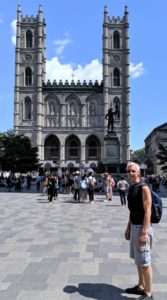
Vieux Montréal, beautiful historic buildings. My favorites were the churches:


Notre-Dame-de-Bon-Secours Chapel


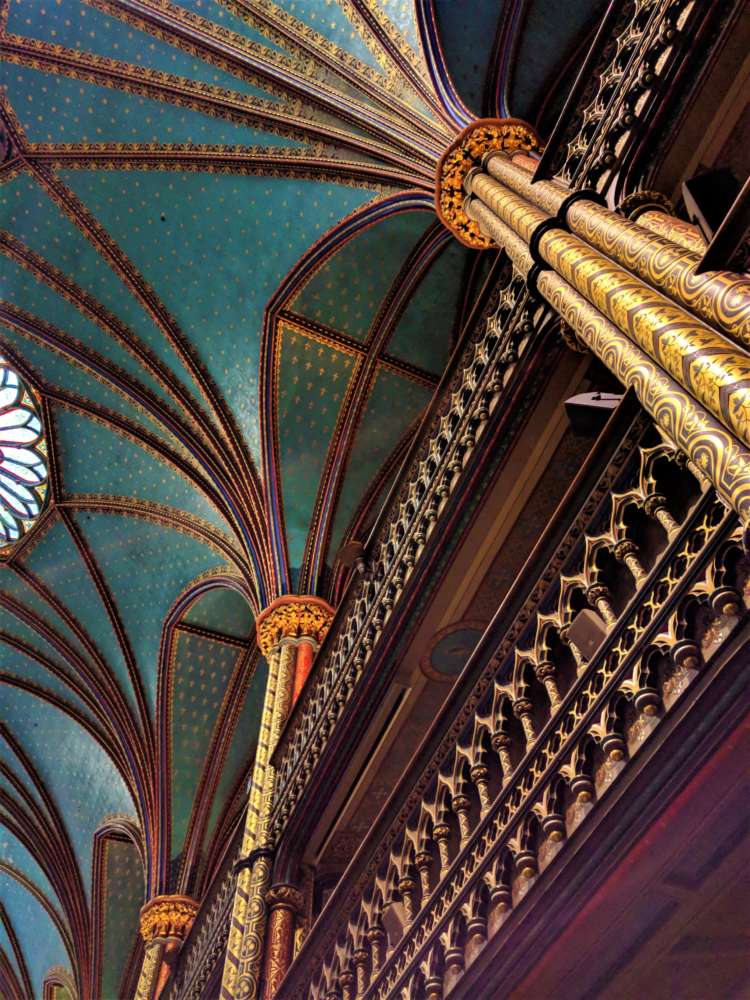
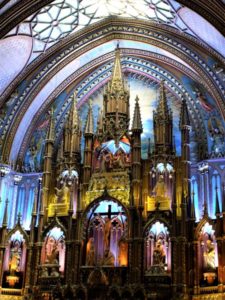
Basilique Notre-Dame de Montréal


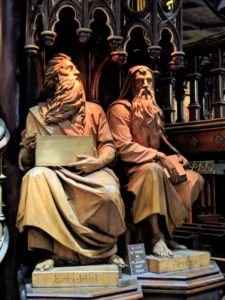
I love the art work, sculpture, and stained glass.

[See also the photo at the beginning of this post.]

Also in Vieux Montréal, watched part of a triathalon competition at Port Montréal and saw Cirque du Soleil’s amazing performance, “Allegria”  [A tip if you plan to go: Bring a hooded sweater. They keep that tent very cold!]

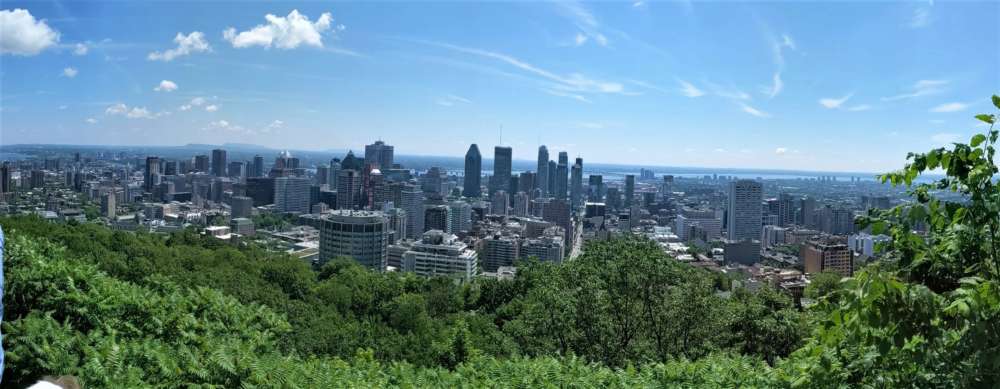
Mont Royal: Walked up to the lookout for a stunning view of the city

The Biosphere: A geodesic dome constructed for Expo ’67. Saw the display of photos and memorabilia from the World Fair, and Kevin reminisced about a family trip there when he was 12. Went to the top for the view.

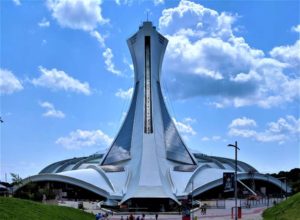
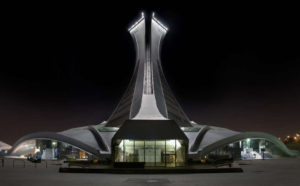
Parc Olympique: Place of the 1976 Olympic Games. Wanted to go up but the observation tower is closed for construction. [Is it me, or does that building remind you of someone’s face, especially at night.  Hint: Star Wars.]

Planetarium: Went inside to cool down in the AC and saw a cool movie about the universe narrated by Tom Hanks.

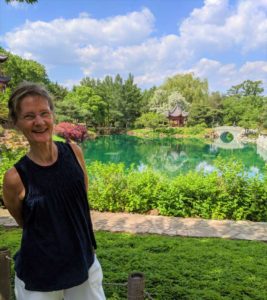
Botanical Garden: Very pretty and, as noted above, fantastic lunch.


WEATHER

Hot, hot, hot weather all week, high 80s and low 90s, which is, apparently hotter than their average July. On Saturday, June 29, it rained off and on, including during the Supersonic concert. We toughed it out under umbrellas, the music was so good.

Of course, you wouldn’t want it any other way but hot for…

INDEPENDENCE DAY

Bye-bye Montréal! Checked out Thursday morning, July 4th, and took a slow drive down to Williamstown, MA, avoiding US 87 and taking smaller scenic roads, like US Routes 4 and 7.

Besides the improved scenery, we needed extra time to finish the audio book we were listening to, Six Years by Harlan Coban. A bit sappy and occasionally predictable, but for the most part a very suspenseful story. We had to finish it!

We’d never been to Williamstown before, and it was a lucky pick for the 4th of July. Had a great dinner on the outdoor patio of Trail House  with, of course, apple pie for dessert. Then we followed the crowd through town to find the fireworks, which were set off at the Taconic Golf Club. There was live music before the fireworks, and a huge lawn to spread out on.

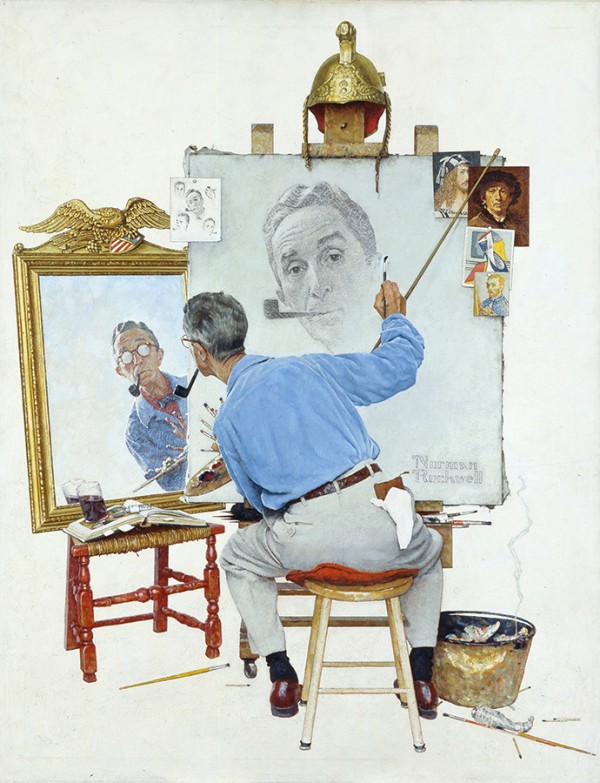
The next morning, after a stay at the Howard Johnson’s and coffee and bagel at Tunnel City Coffee, we took scenic routes to the Norman Rockwell Museum in Stockbridge. This self-portrait is my favorite! What an imagination he had.

Then south on US 7, where we stopped at Fiddleheads Grill in Great Barrington MA , for a delicious lunch. We ate outside and had the deck to ourselves, overlooking a field.

Continuing south on US 7, then Routes 55 and 22, still about an hour from our home, we passed a spooky group of buildings in Dutchess County that look like an old prison. But then we saw a sign: “Olivet University.” Really? A University? I looked it up and found that the site was the former Harlem Valley Psychiatric Center, in operation from 1924 to 1994, home to thousands of patients, at the forefront of insulin shock therapy, electroshock therapy, and lobotomies. Purchased by Olivet in 2013. Read an article about it here: “An abandoned asylum once on the cutting edge of lobotomies may be reborn as a Christian college.

Some creepy looking photos of the abandoned site can be found online. Writers: A good setting for a crime story or novel, perhaps?

So it’s back home, back to the old grindstone. Tongue-in-cheek, friends. My grindstone is pure joy: writing fiction! Current word count of my WIP is 50,000. Fifth Dana Hargrove novel is in the works. More on that to come.

Thanks for taking this trip with me.


Hipster Death Rattle: Book Review and Conversation with Richie Narvaez

For this installment of Fiction Favorites and Awesome Authors, I’m delighted to welcome author Richie Narvaez to VBlog for a conversation about his recently released debut novel.

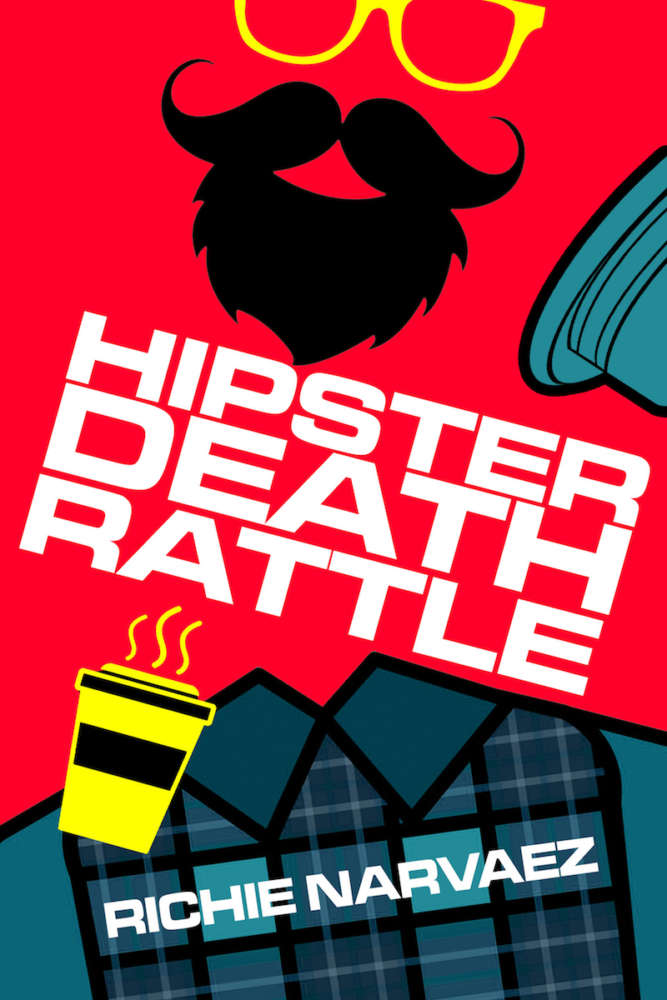
Hipster Death Rattle

The title alone piques your interest, doesn’t it? And how about that cover art by JT Lindroos? Very eye catching. But more important: This is a debut novel not to miss.

If you like crime fiction and want something different and unique, this is for you, especially if you live, or have ever lived, in New York City. To avoid spoilers, I won’t give away any more of the plot than what’s in the publisher’s blurb:

Murder is trending. Hipsters are getting slashed to pieces in the hippest neighborhood in New York City: Williamsburg, Brooklyn. While Detectives Petrosino and Hadid hound local gangbangers, slacker reporter Tony Moran and his ex-girlfriend Magaly Fernandez get caught up in a missing person’s case—one that might just get them hacked to death.

Filled with a cast of colorful characters and told with sardonic wit, this fast-moving, intricately plotted novel plays out against a backdrop of rapid gentrification, skyrocketing rents, and class tension. New Yorkers and anyone fascinated with the city will love the story’s details, written like only a true native could. Entertaining to the last, this rollicking debut is sure to make Richie Narvaez a rising star on the mystery scene.

At the Mysterious Bookshop

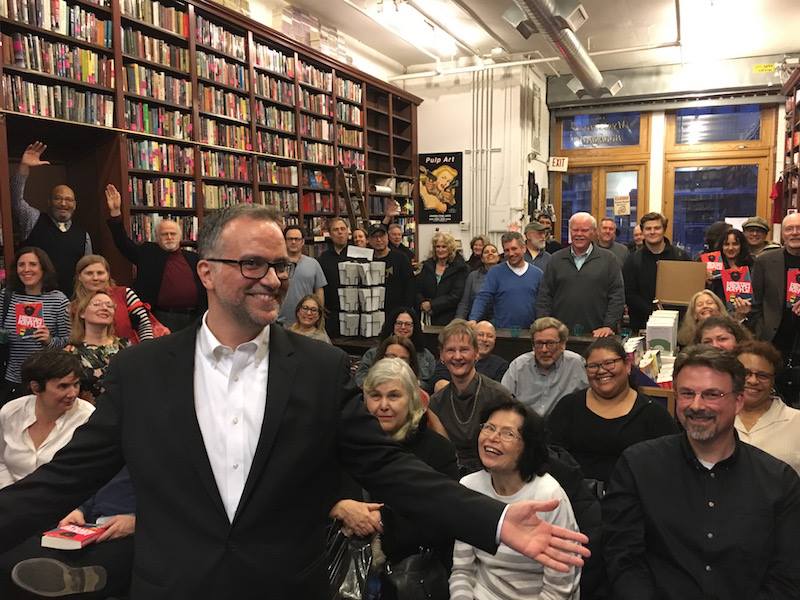
I was fortunate to attend the launch party for Hipster at the Mysterious Bookshop in Manhattan, where the author treated us to a reading of the first few pages. His lively and vivid writing was made even more so by his spot-on delivery and timing. Let’s hope that an audio book narrated by Narvaez himself is in the future.

The novel features a large cast of characters, people from all walks of life and many ethnicities. From a lesser author this might pose a problem, but Narvaez has a knack for making his characters memorable. They come alive on the page through quirky physical traits, dialogue and actions, details about where they live, what they eat, what stores they patronize, and the pets they own. In one scene, for example, a seven-month pregnant thirtysomething yuppie named Erin and her husband Steven (for whom she has endless cutesy nicknames such as “Stevely,” “McSteven,” and “Steve-o-rini”), dine at a new Burundian restaurant in Williamsburg and, slightly nauseated from the Burundian bananas and beans, return to their condo in an upscale, glittering glass tower with river view, where Erin smartly thanks her Mexican doorman with a “Gracias,” confident in the perfection of her Spanish accent because she actually once had a Mexican friend in Texas who complimented her on it. I was laughing.

As you may guess from the book blurb, there are, indeed, machete slashings in Hipster, but if excessive gore gives you nightmares (as it does for me), rest assured that the bloody details are kept to a relaxing minimum, leaving the reader to use his or her imagination, as desired. In the context of the murder mystery and police investigation, social commentary about gentrification and ethnic tensions is expertly woven into the plot in a non-preachy, entertaining way. The author gives us, for example, the dying thoughts of some of the victims, which invariably include emotion-laden regrets about the imagined fate of their apartments after they die. It’s hilarious, but at the same time, a statement about the universal preoccupation of New Yorkers with housing and real estate.

And now, I’m pleased to say that the author has graciously agreed to answer some of my burning questions.

Welcome to VBlog, Richie. I thoroughly enjoyed Hipster Death Rattle. Social commentary figures prominently in your novel, enhancing, never detracting from, the story line and characters. What led you to incorporate this theme into a murder mystery as opposed to, say, a literary or mainstream novel, and what do you see as the advantages of this format?

Ah, well, I did originally try to write Hipster as a mainstream book, but it was too close to me and I stumbled. I couldn’t get past my own bitterness about gentrification in Williamsburg, and all the characters were just talking points, not people. I needed a plot to anchor my pain and my ideas.

And that’s the thing about genre writing isn’t it, the thing that drives literary or mainstream snobs mad: it’s got plot! I could’ve done this as a horror or sci fi novel, but crime fiction is the most grounded of the so-called genres, and I wanted this story to have literal resonance, not metaphorical. And crime fiction is a very flexible format—flexible as a dancer! You ignite the story with the mystery, and the process of its being solved allows the protagonists and the reader to encounter people and points of view.

Of course some readers would prefer to have their corpses served without a side of social commentary, so I may lose those readers. But many of the greats—Christie, Chandler, Highsmith, Paretsky—have social commentary in their works. Crime fiction is actually a perfect vehicle for social commentary.

I knew there was a reason I keep dancing—to make my crime fiction better! As for the flexibility of the genre…maybe this book was therapy or vicarious payback for you? (“Lolz,” as your character Gabrielle likes to say.) “No one there is who loves a hipster,” whispers the murderer as he comes upon his next victim. How much of this is personal for you, based on your experience, witnessing the gradual transformation of the neighborhood of your youth?

It’s all very personal. I was born in Greenpoint Hospital and raised in Williamsburg, Brooklyn. I went away for college, but then returned to witness the rise of gentrification. Slowly, gradually, I saw people displaced, many of my friends and relatives, and I saw the disrespect and erasure of the culture of the people who had lived there for so long.

To be clear, gentrification is not a natural process. Yes, neighborhoods change hands all the time, but gentrification is different, it’s insidiously manufactured, a combination of real estate developer and governmental cunning, urban renewal for profit, not for people.

I’m not sure how much payback there is in writing the book. The Powers that Be would likely not take notice, and they will likely never be punished for their greed. But, therapy, yes, a little. Although the pain does not go away completely. It just feels better for a little while.

Carpe diem, Richie. My Latin is a little rusty, but…

Hah! Habeas corpus and obiter dictum!

Touché! Yes, we lawyers tend to sprinkle in the Latin and forget that it isn’t English. But I did learn some new non-legal Latin from your book. I like the way you worked it into the dialogue between Chino and his former college professor and bad guy, Litvinchouk. We understand most of it in context, and it adds a lot of humor to their relationship. How did this idea come about?

The Latin thing came ab initio from the fact that the person I partially based the character of Chino on actually did minor in Latin in college. So at first it was just a neat character detail, and it allowed me to spend hours learning some very basic Latin myself. But then I realized it added some irony. People hate hipsters for being snobby. Yet, here is a main character who holds on to and cusses in a dead tongue, a language darling to the elite and the intellectual. Also, Chino is a Latino who can speak Latin but not Spanish, underlining his separation from his own culture, Othering him to underscore his status as another kind of hipster himself.

What are your tips for writers who want to incorporate irony and humor into their writing? Or does this just come naturally to you and woe to us?

I have to say the humor seems to come fairly naturally for me. A genetic quirk. Or the legacy of a sensitive childhood. Although, I have to say, in the first draft of Hipster there was no humor. I was trying to be a serious crime writer and write seriously about a serious subject. But I realized I wasn’t very satisfied with that, and it kind of bored me. So I went back and added in the funny.

Now, it’s difficult to tell someone how to be funny and ironic. Not taking yourself too seriously is key. And I will say the chief tool to use is surprise. Humor and irony come out of the unexpected. So, as you’re writing along, stop and think about what everyone expects will happen or be said next, and then do the opposite or at least sideways, something silly and/or something that resonates with the theme of what you’re trying to say. In any case, don’t give the readers what they expect.

Good advice for writers, but I won’t allow you to thwart something I’m expecting from you: more great writing. What’s next? What’s on your computer screen these days?

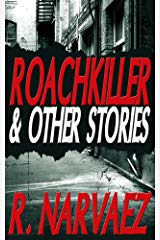
Littering my desktop are several short stories in various stages as well as a novel, but that seems to be a permanent state of affairs for me. At the moment I’ve got a YA novel making the publisher rounds. And there’s a second book of short stories, to follow Roachkiller and Other Stories, I hope to have out next year.

Best of luck on all these endeavors, Richie. I look forward to reading your next book.

Dear Readers,

You can get Hipster Death Rattle from Down and Out Books (see also links to booksellers on the Down and Out Books site), and at the Mysterious Bookshop.

After reading Hipster, if you’re looking for more good summer reading, I’ve built up quite an archive of book reviews and author Q & As. Click the VBlog tab, and then, on the sidebar, “Fiction Favorites and Awesome Authors” or “Legal Eagles” (my series on attorneys writing fiction). You will find articles on books by all of these amazing authors and more: Kevin Egan, Nancy Bilyeau, Manuel Ramos, Allison Leotta, Adam Mitzner, Kate Robinson, David Hicks, Helen Simonson, Eowyn Ivey, William Burton McCormick, and Allen Eskens.

Happy reading!

The Contest: Book Review and Conversation with Kate Robinson

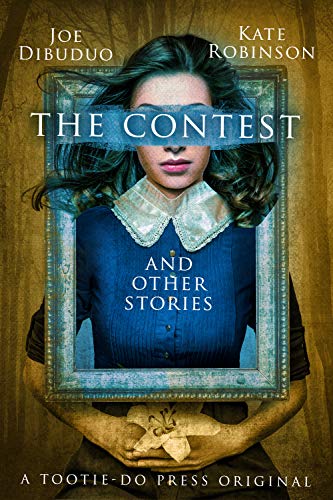
I recently made an exciting discovery I’d like to share with you, a story collection by authors new to me, Joe DiBuduo and Kate Robinson.


The Contest and Other Stories is exceptional in every respect: concept, writing quality, and pure entertainment value. The nineteen stories in this volume could stand alone as an exquisite collection of short fiction, but the authors have added so much more, framing them, uniquely and imaginatively, in the context of an engaging novella about a struggling art magazine in the 1960s. The magazine holds a monthly short fiction contest, challenging writers to submit tales inspired by classic oil paintings. The nineteen winners of the contest, with the artworks that inspired them, alternate with chapters of the novella.

The short stories run the spectrum from the delightful and fanciful to the macabre and horrific. A few of my favorites: A bone-chilling alternate history of Juan Rodriguez Cabrillo’s demise while exploring Santa Catalina Island in 1542. A look inside the mind of a hallucinating, mad artist, Vincent Van Gogh, negotiating with his muse. A seemingly sweet, romantic nineteenth century tale aboard a passenger ship that surprisingly creeps into a nightmare on the power of memory. A slowly unfolding mystery about the significance of an artifact from the time of Napoleon. A heartwarming paranormal story of reincarnation and transformation, from dead-of-winter tragedy to a sunny future of hope and life.

After each story, I thoroughly enjoyed the ensuing chapter of the novella, eager to learn what would befall the art magazine and its engaging cast of characters, eager to learn, after that, which artwork the editors would choose for the contest and to read the next “contest winner,” assured that it would be something entirely new and outstanding. The novella itself ends in a surprising twist. In short, this was a page-turner, and even better than that, a testament to the value and necessity of art and creativity.

The Contest is for anyone who loves great storytelling, a unique and different reading experience, and thought-provoking themes that honor your intelligence and spur your imagination. I’m thrilled that Kate Robinson, one half of the writing team, has graciously agreed to answer my burning questions about this unique, creative project.

Welcome to VBlog, Kate! Tell us a little about your background and that of your co-author Joe DiBuduo.

We like to say that Joe has the vivid imagination and I have the word-whacking toolbox, as stated in the book bio. Of course, in reality we both have the imaginative and editorial sides of author mind, though we often see things differently. That presents some challenges in collaboration, but it also brings many strengths—the ability to see characters and plots from various angles is helpful.

Joe and Kate

I began writing poetry in childhood and didn’t become interested in writing fiction until my forties, and my initial immersion in poetry fostered a lyrical aspect to my prose, or so I’m told. Joe began writing fiction in his sixties and later adopted poetry into his daily writing routine after he had a good feel for the mechanics of story. He’s developed a style he calls “poetic flash fiction”—he’s partial to telling stories within the confines of many of his poems.

I’m more an anything goes type of writer—I’m game for whatever my subconscious channels at any particular time, and my body of work is smaller than Joe’s but more diverse in that I experiment with many different styles.

How did you and Joe develop the concept for The Contest?

Joe is an artist who works in many media—glasswork, sculpture, and painting. So he has a natural bent for art and a strong interest in art history. He has a great love of coffee table art books and visiting art galleries and museums, and his walls at home are filled with paintings and his front yard is filled with his massive sculptures.

As Joe was learning to write fiction, he chose to use artwork as story prompts. While he worked with these stories inspired by paintings, he envisioned a connected collection of historical stories linked with a more contemporary story about a young man struggling to find his way in the world. And so, The Contest and Other Stories was born.

When I began crafting story, I used my dream journal entries rather than visual art as prompts.

I’m also a museum aficionado, but I lean more toward appreciation of the historical and anthropological aspects of museum collections. I have a BA in Anthropology with emphasis in Museum Studies and a big interest in indigenous peoples’ cultural stories and in their modern fiction.

So we each brought our unique interests and talents into this quirky collection of stories.

Tell us a little about how your collaboration worked.

Joe began presenting the artwork prompted stories to the critique group we both belonged to in the early ‘00s. I felt these stories were his best work at the time (and I still feel that’s true today). I was thoroughly intrigued with the stories and greatly enjoyed critiquing them. Eventually, Joe had a rough draft consisting of the connecting novella and nearly three dozen stories in various stages of completion. He felt bogged down with the enormity of fleshing out the incomplete stories and paring the collection down to a manageable size, and knowing I loved the stories, he invited me to share his vision as a co-editor and co-author. By this time (early 2011), he still lived in north-central Arizona and I had landed in California after a year of working on a Master’s degree in Wales. So the collaboration became one done via lots and lots of emails forwarded back and forth over the next several years.

In retrospect, Joe had the initial vision and the initial go at writing the collection draft, and I followed up with my two cents. In some cases, I simply line edited nearly finished stories, and in other cases, I did substantial research and writing to complete them. I also designed the book interior and did some marketing in the form of submitting stories to journals and anthologies to drum up interest in the collection. We had a half-dozen stories published in advance of the book.

Each story in this collection is unique. Do you have particular favorites?

I’m partial to the stories in which the artists appear, especially those in the context of magical realism or alternate history—or both. “Night Café” is my personal favorite. “Masterpiece” and “A Life in Flowers” are two others I enjoy reading time and time again.

Joe is also particularly proud of “Night Café” because he’s particularly fond of the work of Vincent van Gogh, and because the story won a quarterly New Short Fiction Award at a music website, Jerry Jazz Musician, in 2012.

Kate, thank you for this insight into your collaboration!

Dear Short Story Lovers,

I highly recommend The Contest! Get it here.

Stay tuned for more short story news, coming your way soon! I have three new stories, to be published this year in a magazine and anthologies. And…wish me luck. My latest collection, Your Pick: Selected Stories, is currently a finalist for the 2019 Montaigne Medal. The award, named for French philosopher Michel de Montaigne, is for “the most thought-provoking books. . .that either illuminate, progress, or redirect thought.”

Your Pick is a 5-star Readers’ Favorite and “recommended without reservation” by Book Viral.