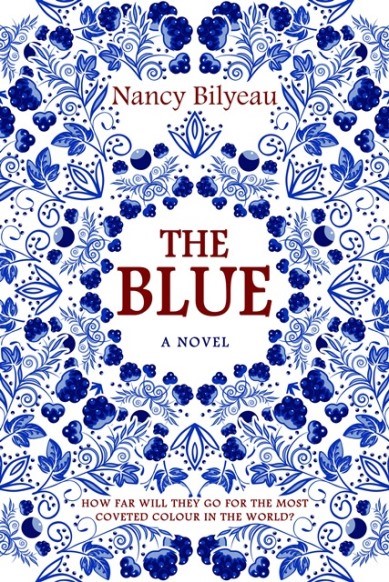
The Blue: Book Review and Conversation with Nancy Bilyeau

For this installment of Fiction Favorites and Awesome Authors, I welcome author Nancy Bilyeau to VBlog.

Nancy’s recent release, The Blue, is a novel of suspense set in the rivalrous art and porcelain worlds of 18th century Europe. The protagonist, Genevieve Planché, is an English-born descendant of Huguenot refugees, a young artist who resorts to extreme measures in her quest to follow her dream. Her journey follows an unpredictable path of intrigue, danger, crime, and romance. The characters we meet along the way have their own personal agendas, whether political, commercial, scientific, artistic, or romantic.

“We see blue everywhere in the natural world, in the sky and the sea and the lakes…but what do we really see? It’s ephemeral. A reflection of something else.” So explains the chemist who feverishly works to capture the most desirable shade of blue and successfully apply it to the decoration of porcelain. In the midst of the Seven Years’ War, England and France are in a race to develop this elusive formula for their lucrative porcelain industries.

The Blue is meticulously researched, bursting with colorful details that draw you into the story, from the wild boar hairs in Genevieve’s paint brushes to the dangers of mining cobalt ore deep in the mountains of Saxony. In the month since its release, much has been written about The Blue (see blog tour links, below). It was the Goodreads’ Recommended Choice for Historical Novel in December 2018 and a BookBub Editors’ Choice for New Releases.

No spoilers here! I will simply say that if you enjoy historical fiction, crime and suspense, romance, plot twists, interesting characters, or just a great story, The Blue is for you! And now, to give us some fascinating details behind the scenes, Nancy has graciously agreed to answer some of my burning questions.

Welcome to VBlog Nancy! I understand that you drew on your own Huguenot background in writing The Blue and named a character, Pierre Billiou, after an ancestor. Tell us a bit about your ancestry and the part it played in your inspiration for this work.

I named a character, Pierre Billiou, after my own ancestor, though it is not his life I am describing. I wanted to pay homage to my Huguenot background by using his name. The Pierre in my novel fled France for England as a young child after Louis XIV took action against the Protestants in his kingdom in 1685—it’s called the Revocation of the Edict of Nantes. Basically, the King was canceling the measures of tolerance for Protestants. He wanted France to be One King, One Faith. Pierre and his family settled in Spitalfields, in London. My book takes place in England and France, so I needed to make these changes.

Now the real Pierre Billiou, not the one in my book but the one I am descended from, left Europe even earlier. France was not too welcoming to Protestants even before Louis XIV took such an action, and there were a great many Huguenot immigrants coming to America. They gathered in New York, South Carolina, and Virginia.  Pierre immigrated to New Amsterdam (now New York City) in 1661. One of his children was born on the boat crossing the Atlantic—I am actually descended from that son. I have two kids, and I can’t imagine giving birth on a boat crossing the Atlantic in the 1660s! I’m very curious about what life was like in all ways for him. What I know is that he built a stone house on Staten Island—it’s still standing today and is on the National Register—and he was involved in colonial government. But when the English sailed into the harbor, they took over. Changed the name of the city and demoted the Dutch and the Huguenots who were running things.

I was able to research Huguenot lives, beliefs, and values—which I was already interested in—while working on this novel, which gave it an extra level for me.

Some writers begin with the creation of character, letting the characters guide them to the story, other writers begin with the creation of plot. How would you describe your writing process for this novel?

I didn’t come up with my main character, Genevieve Planché, and then create a story for her. I came up with the idea of a spy story set in the porcelain world of the 18th century and then I figured out some specifics that led me to the characters. First, where is the story going to take place? I decided to make it about the rivalry between France and England that was so intense during the entire century (and longer!), extending into the porcelain business, so the story would begin in England. What kind of spy did I want to write about? Once I read that Huguenots and their creativity and artistry were essential in several English porcelain factories, Genevieve took shape in my mind. As for Sir Gabriel Courtenay, the “master spy,” he is based on research I did about espionage of the time—can’t say more because of spoilers. But espionage during this time is fascinating—and largely undiscovered country to readers today. I find with historical fiction you can’t come up with fully developed characters until you know your period well, otherwise they might not be grounded in reality. For me to say, I’ll write a brilliant police detective in the 1750s, pretty quickly I would run into the fact that the Bow Street Runners, the forerunners of the British police force, were in very early stages then. You have to avoid a modern mindset in character creation.

The Blue has wonderful passages about the creation and importance of art, and you’ve dedicated the novel to your father, “who loved art so very much.” Tell us about the place of art in your life.

My father from a young age loved art and wanted to paint. He came from the opposite of an artistic family. My grandfather moved his family from Tennessee to Detroit, Michigan, in desperation for work during the Depression. He got a job at Henry Ford that he was proud of. He thought the fact that my father wanted to be an artist meant he wasn’t manly and he was abusive about it. My father enlisted in the US Navy in World War II in its final months as soon as he turned 18. When he returned to Detroit, he went to art school on the GI Bill. He worked as a commercial artist in Illinois and Michigan to support his family, but he had an art studio in our basement and I have many memories of his painting watercolor landscapes down there. He sold his watercolors at art fairs, principally the Ann Arbor Art Fair, and a few Midwest galleries. I used to help out during the Ann Arbor Art Fair; he had a booth on Main Street. Those were long days! But it was a happy exhaustion. So for me, art was the heart and soul of my father, and I was part of that through watching him and helping him a bit. I understood that it was a calling for him that he almost couldn’t control. He always wanted to create. I absorbed the struggle to succeed as an artist and the intense competition and classism. A Michigan factory worker’s son is not going to have an easy path into the art world.

I am not an artist myself, but I am an avid museum goer; I love to look at great art.

In reading the novel, I felt Genevieve’s pain and frustration at the roadblocks to her aspirations as an artist. In your research of 18th century female artists, did the story of any single artist serve as inspiration for your character Genevieve?

I probably drew on some of my own frustration over roadblocks in success as a writer as well as watching my father struggle. He wanted to be acknowledged as a fine artist but he wasn’t treated as one or reviewed as one in his lifetime. His work did sell fairly well, and is still selling on eBay. I read an interesting analysis of his technique online that went with one of these paintings that I think would have made him happy.

I researched a few women artists who had to overcome the disapproval of their being artists in the 18th century because of their gender.  I found the life of  Élisabeth Vigée-Lebrun enlightening in several ways. She was successful in the late 18th century and is famous for her portraits of Marie Antoinette. When she was in her teen years, she was painting professionally in France and her studio was actually seized for her practicing without a license! After that she married a painter and he helped her; that was a way for women to surmount the obstacles. She made use of family connections too. Once Marie Antoinette decided to give her commissions, she was obviously set. But what is interesting is that I went to an exhibit of Élisabeth Vigée-Lebrun at the Metropolitan Museum of Art and while admiring her body of work I thought some of the faces lacked expressiveness. Here’s the problem: In the 18th century, to be a great artist you needed talent and drive but you also had to have intense training. In my novel, Genevieve realizes she needs to work as an apprentice; she is clear-eyed about the technique she must master to reach a desired level. Her inability to find someone to teach her is what sets her on a certain risky path.

Masterfully woven into your story of riveting suspense are several thematic elements relevant to mid-18th century Europe, including political intrigue, industry and the economy, the roles of gender and social class, and the interplay of art and science. Did you set out to incorporate all these elements into your story?

I didn’t explicitly do that, no. But by being drawn to spying and politics and art and science when they were at this exciting juncture in the 18th century, these other issues naturally come out of that. And I am always drawn to social class in my novels, I think. After four books, I clearly can’t stay away!

I’m very heartened by the readers who like the fact that my novel delves into these areas. I’ve been criticized for it in the past. One industry professional said, “You’d have a much easier time if you’d write romances about dukes and pirates.”

Well, Nancy, I’d say that The Blue has far more to give than a romance about dukes and pirates! I so enjoyed it and look forward to reading whatever you have in store for us next.
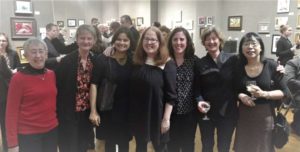
I’m with Nancy and writer friends at Mystery Writers of America, NY chapter, holiday party

Dear Readers,

Historical Fiction Virtual Blog Tours is hosting a Giveaway of The Blue. Click here to enter by January 18. Visit the blogs on the tour schedule, listed below.

Nancy is also the author of three, very well-received novels in a Tudor mystery series, The Crown, The Chalice, and The Tapestry. Discover all her books on Goodreads and Amazon.

Blog Tour Schedule

Wednesday, January 9
Review at A Bookish Affair

Thursday, January 10
Review at 100 Pages a Day

Friday, January 11
Review at Passages to the Past

Saturday, January 12
Interview at Passages to the Past

Sunday, January 13
Interview at V.S. Kemanis

Monday, January 14
Review at Let Them Read Books

Tuesday, January 15
Review at Historical Fiction with Spirit

Wednesday, January 16
Excerpt at Umut Reviews

Thursday, January 17
Review at Reading the Past

Friday, January 18
Review at Tar Heel Reader

Proclamation Day of the Republic of Latvia

Latvian Flag

Today, November 18, 2018, Latvia celebrates the 100-year anniversary of its proclamation of independence. This does not mean that Latvia has enjoyed 100 years of freedom. Far from it. The story of Latvia is riddled with long periods of German and Soviet occupation. Freedom from Soviet rule was restored in 1991.

On Proclamation Day, and as we look forward this week to Thanksgiving, I am grateful for the freedom we have in the United States and am reminded that it should never be taken for granted. My late father, as a teenager, was a displaced person during World War II, when Nazi and Soviet troops clashed, literally in his backyard. My father, his sister, and their parents joined the thousands of Latvians who fled. I can hardly imagine the trauma of being ripped from your country, your home, and everything you know, to be a refugee, to make your way in another country, not able to go back. My experience of these events has been secondhand, through the stories of my late father and late aunt. I wish I had asked them more when they were still on this earth!

As I so frequently experience, my imagination takes hold of bits of fact, and expands and embellishes them until they explode into story. My story collection Your Pick, comprised of reader favorites from previous collections, opens with a reprint of “My Latvian Aunt,” a story that won an award and has garnered much interest over the years. I think this story is compelling because my late aunt’s voice can be heard in its pages. I incorporated bits of our conversations and wove historical facts about Latvia and WWII into the story. I did some of the same in a murder mystery with a Latvian protagonist that takes place during the Cold War. “Dzintra’s Tale” has been accepted for publication by Ellery Queen’s Mystery Magazine, and I’ll be sure to let you know when it appears in print!

Your Pick: Selected Stories, launches on November 23. Click here if you’d like to enter a giveaway on Goodreads for a free copy of Your Pick in e-book!

A Special Experience: Expressing a Caregiving Story

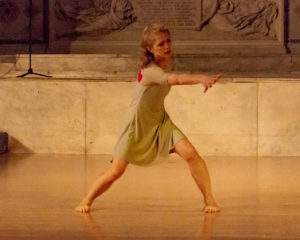
V.S. Kemanis in “Embrace, Give, Heal,” photo credit Nick Bonitatibus.

I was honored to be invited to participate in a program of the CareGivers’ Project, “In Time & Space.”

The Mission of the CareGivers’ Project is to create a place to express and reflect on the complexities of being a caregiver for an elder and provide resources, support and benefits to the health of caregivers.”

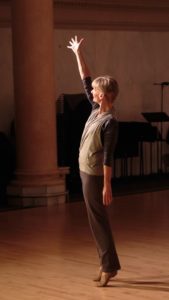
V.S. Kemanis in “Embrace, Give, Heal,” photo credit Eric Bandiero

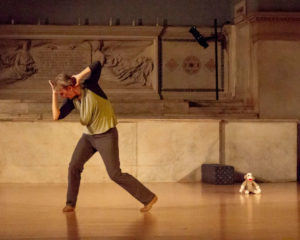
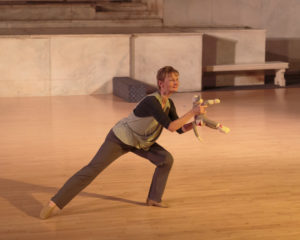
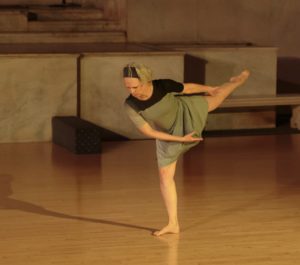
In keeping with its mission, the CareGivers’ Project has spearheaded a number of valuable community-based programs and unique approaches to expressing and reflecting on the conflicts and rewards of being a caregiver. In Time & Space takes the groundbreaking approach of exploring caregiving stories and involving the community through the medium of dance. My solo dance depicted my experience as a sandwich-generation caregiver, suddenly called to care for an ailing parent at a time when my children were very young.

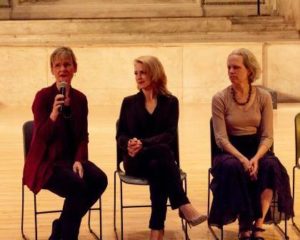
Last weekend, we had our premiere performance at Judson Memorial Church in Manhattan, with audience participation and talkback.

Talkback at Judson Memorial Church, November 3, 2018, photo credit Nick Bonitatibus

Teresa Perez Cecco, photo credit Irina Leoni


The project was fortunate to have the talents of choreographer/artistic director Teresa Perez Ceccon. Working with her on my piece was a dream come true!


Jomarie Zeleznik in “Cry Me a River,” photo credit Eric Bandiero


Other beautiful performances by dancer-caregivers last weekend were Dr. Jomarie Zeleznik, the executive director of the CareGivers’ Project, dancing “Cry Me a River”. . .

and nationally recognized speaker and educator Rochelle Rice, dancing “Bob and Eileen,” a hospice caregiving story.

Rochelle Rice in “Bob and Eileen,” photo credit Nick Bonitatibus


And we are just getting started! A film documentary is in the works, encompassing the process of creation, performance, community involvement, audience participation, and sharing of caregiving stories.

You can join us in our exploration of reflecting individual experience and expressing the caregiving journey through dance by giving a tax-deductible contribution, small or large, to the CareGivers’ Project. Any and all help is much appreciated. CLICK HERE TO PARTICIPATE!

Photo credit Eric Bandiero


Goodbye for now! Hope to see you at our next performance!

So Long Summer — And Exciting Short Story News!

Is today really the first day of autumn?

I’m already missing summer and the many beautiful days I enjoyed by the ocean, Jones Beach NY and Point Pleasant NJ. Sun, water, and sand!

Bye-bye seagulls!

My summer wasn’t all play. Plenty happening with my writing, and I’ve got some great short story news to share.

Cover reveal! Isn’t this a beautiful cover?

Coming November 23! Your Pick, a collection of reader favorites, carefully selected from my four previous collections. For readers who are new to my short stories, this is the place to start. The greatest hits, if you will. I’ve assembled a dozen of my best stories based on the comments I’ve received from readers over the years. Your Pick includes stories at the emotional heart of my work, those that readers have mentioned, time and again, as their favorites. Your Pick is now available for preorder in e-book, and will also be available in paperback on publication date.

More short story news: I’ve sold another story to Ellery Queen’s Mystery Magazine! “Dzintra’s Tale” is a murder mystery incorporating historical fact about the mass emigration of Latvians escaping the Soviet invasion during World War II. As you may know, much of my knowledge about Latvia comes from my late father and aunt, who were displaced persons after the war. Publication date for “Dzintra’s Tale” is yet to be determined, so stay tuned. Another new story of mine has been accepted for inclusion in an anthology with other fantastic mystery and crime writers—more news on that to come as well!

For the short story writers and novelists reading this, you might be interested in a series of three articles I wrote this summer, with tips on “Adding Criminal Law and Procedure to Your Fiction.” The series was posted in August on the blog for the Mystery Writers of America, New York chapter: Part I, “Search and Seizure”; Part II, “Stop & Frisk, Arrest, Identification Procedures, Indictment,” and Part III, “The Courtroom—Guilty Plea and Trial.”

That’s all the news fit to print for now. Wishing you a lovely, crisp, productive autumn!

Ordinary Life: Book Review

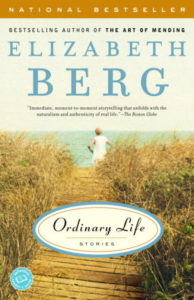
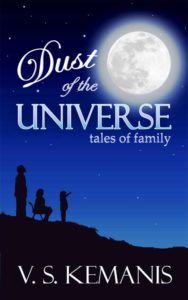
Dust of the Universe by V.S. KemanisOne of my readers gave me Ordinary Life: Stories, by Elizabeth Berg, and mentioned that the themes in the book reminded her of my collection Dust of the Universe, tales of family. I’m so thankful for this gift.

Each story in this collection reflects exactly what the title says, ordinary life. So simple, yet so deep, these stories touch on the exquisite moments we all experience and can relate to. Elizabeth Berg reawakens us to the small things that make us human, make life worth living. She reminds us to be grateful for the routine and commonplace events that give us comfort, delight, and yes, magic.

The opening and closing stories in this collection are perfect bookends Ordinary Life: Storiesto the theme. In the opening piece, “Ordinary Life: A Love Story,” a woman of 79 takes a week-long timeout from her husband to reflect on her life. The memories and images of people, possessions, and family milestones tumble out in a free flow of association. At this stage of her life, she wonders where the time went and what’s next. “How could she have known that ordinary life would have such allure later on?”
The closing story, “Today’s Special,” is about how good it feels to eat in a diner. Is there anything more mundane? It’s an extraordinary piece of writing! The author tells us in the afterword that this is one of her earliest stories, a reflection on what she might tell a friend who is suffering from depression. It’s a wonderful description of the comfort food and the people in the diner, along with a list of other everyday images, ending with this: “Isn’t it those small things that add the necessary shape and meaning to our lives? And don’t we miss seeing them if we look too hard for big things?”

Many of the relationships in these stories have suffered a gradual erosion from the tedium of everyday life. This is something we all struggle with. Underlying the weight of years is the yearning for something BIG, the revelation of a grand plan. Habits and patterns of behavior become ingrained and hurtful to others. “We all return to what’s familiar to us… Even if it’s not so wonderful, it’s what we know,” a man tells his wife, who struggles with the anger she feels toward her emotionally distant, verbally abusive father. (I love the name of that story: “One Time at Christmas, in my Sister’s Bathroom”!)

The story that really hit me was “Take this Quiz.” It concludes with a metaphor that’s a bit too obvious, but its placement at the end and the truth it reveals runs deep. The implicit message is clear and applies to every relationship, whether casual or intimate: Once the words are out of your mouth, it’s too late to take them back.

Each story is a compact little gem with a lesson to learn or a nugget for inner reflection. The stories move toward something. In their struggles with interpersonal relationships, Berg’s characters always make a transition toward self-knowledge, acceptance, or revelation.

Dear Short Story Lovers: I highly recommend Ordinary Life.

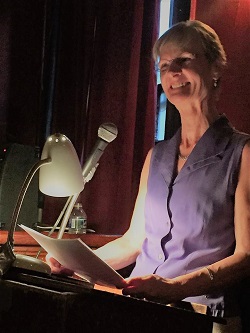
And V.S. Kemanis at KGB Barspeaking of short stories, here I am at the iconic KGB Bar in Manhattan last month, reading my short story “Times Square Tail” from Malocclusion, tales of misdemeanor. What a fun night!
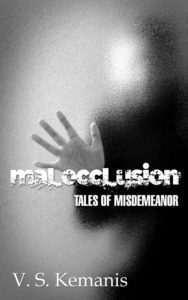
Malocclusion, tales of misdemeanor


Stay tuned for more great news about my short stories: cover reveal for a collection of selected stories, and new stories accepted for magazine and anthology publications!


Discovering America Travelogue (2): June 2018

On the road last week, back home again, it’s time to reflect on wonderful times with family and friends, new sights and experiences. For this installment of Discovering America, I offer a few highlights of our trip to Chicago and Grand Rapids, with recommendations for places to go and things to do!

June 21-22 – getting there

This trip was about being there, not getting there. Here’s the boring bit. New York to Chicago, 13 hours in two days, I-80 and I-90. To cut costs, we tried a less expensive overnight option: The Red Roof Inn, Elyria, Ohio. Not recommended! However, Ohio does get the prize for the best service plazas along the turnpike.

June 23-24 —Chicago, Illinois

In your dreams: Clear blue skies, 75 degrees in Chicago. For us, a reality!

We started Saturday with a stroll by Lake Michigan, always a must-do.

After that, we had brunch at Marmalade on West Montrose Avenue. I recommend this establishment with its unique, delicious breakfast/lunch menu.

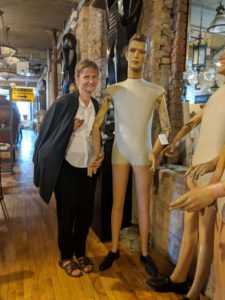
After brunch, we browsed at the nearby Architectural Artifacts. What a fascinating place! (although a bit out of my price range) A huge space jammed with antiques and, like its name, architectural artifacts—old stuff pulled off of, and out of, buildings.

Here I am with my boyfriend artifact.

Next up, street festivals. Of course—it’s Chicago in the summer! Our hosts guided us to two of them. We had a blast.

First, the Logan Square Arts Festival. Booths with arts and crafts. Non-stop music. We listened to Fat Night, a band with an Earth, Wind & Fire-like sound. Click here to see a nice video of their music.

We also shook our behinds to Las BomPleneras. These women are amazing. Here is a quote from this website:

“Las BomPleneras is an all-female ensemble dedicated to the preservation, promotion and growth of the Puerto Rican culture through the music and dance genres of Bomba and Plena. Their mission is to create a process of empowerment in the female performer in all her aspects, while also instilling a sense of personal ownership and responsibility to the survival of the Puerto Rican music and dance genres of Bomba and Plena.”

I won’t upload my sad attempt at a video taken on my cell phone. Click here to see a great video of their performance in 2014.

The second festival was the Gold Coast Greek Festival at Annunciation, a smaller event at the Greek Orthodox church on N. LaSalle Drive. Great food, wine, and live music. We did a little Greek line dancing! At the end of the evening, we went to George’s Ice Cream & Sweets, North Clark Street. Mighty good!

Sunday was low key (were we exhausted after that whirlwind Saturday?) We went to the Lincoln Park Conservatory and wandered through the moist air and exotic plants in the greenhouse. Strange vegetation fascinates me. Some of it looks like Dr. Seuss illustrations. (Off subject: Did you know that we mispronounce his name? Read this about famous authors and their pseudonyms.)

While we were standing next to the Ylang-Ylang tree in the Conservatory, a docent told us the story of the creation of Chanel No. 5 in 1921, a mixture of Ylang-Ylang, rose, and jasmine. She was very into this story and had little vials of Ylang-Ylang in her pocket for sniffing. Here’s a video about the creation of Chanel No. 5, which doesn’t seem to focus quite so heavily on Ylang-Ylang.

Outside the Conservatory, we sat on the edge of the fountain and had a picnic. All agreed that food tastes most delicious when eaten outdoors.

June 25-26 – Grand Rapids, Michigan

On Monday, we spent several hours at the Laketown Beach on Lake Michigan, in nearby Holland, MI.

Steep and seemingly endless wooden stairways lead to the top of the dune and down the other side to the beach. The sand has blown over and buried a big part of the stairway. You sink down into it, wondering if the stairs are really there.

The water was too cold for swimming. It was clear, clean, easy to wade into (no muck on the bottom), but eerily devoid of any visible fish, minnows, or water fowl. No dearth of insects, however: Beware of the biting flies!

Monday evening we walked through the Heritage Hill residential district on the way to downtown Grand Rapids. The large, historic homes are well preserved and each one is unique. Really beautiful!

We ate dinner at San Chez Tapas restaurant. Delicious! In this photo I’m looking quite content after finishing that glass of wine.

As we entered the restaurant, down the block, a large crowd was gathered near the Van Andel Arena, waiting to go in. James Taylor and Bonnie Raitt were playing. The restaurant empathized with all of us who weren’t attending the concert by playing a lot of James Taylor songs.

The next day, Tuesday, we drove past the Meyer May House, designed by Frank Lloyd Wright.

Then, we carried on to the Frederik Meijer Gardens and Sculpture Park. We spent a couple of hours there and could have stayed longer. Each sculpture is a discovery tucked imaginatively into the greenery.

My favorites: “The American Horse” by Nina Akamu and “I, You, She, or He…” by Jaume Plensa.
 

Also very enjoyable, the Japanese Garden with haikus engraved on the rocks. Darn. Wish I’d taken some photos of the poems.

After the gardens, a close friend treated us to a tour of two buildings at the Steelcase Corporation. The entire place is filled with models of work stations, glass offices, studios, hubs, carrels. Not a single cord to trip on. All information resides in the air. Have you seen the movie “The Circle”? For a person like me who suffered years of paper cuts in offices furnished with clunky, sticky-drawered file cabinets, this is a dream world.

Rain all the way home. Thank you, weather gods, for giving us clear skies when it mattered!

Now, it’s back to the “old grind,” ha ha. Sorry to make you jealous, but I enjoy my new way of life. Currently, I’m adapting my novel Thursday’s List into a screenplay, then on to writing the fifth Dana Hargrove novel!

7 Stories in 7 Sentences: Crime Fiction Review

Time is tight. Consider reserving a bit of it to feed your imagination and creativity. A story a day! Have a complete experience in half an hour, give or take. Be entertained, enlightened, intellectually stimulated. Drawn into another world.

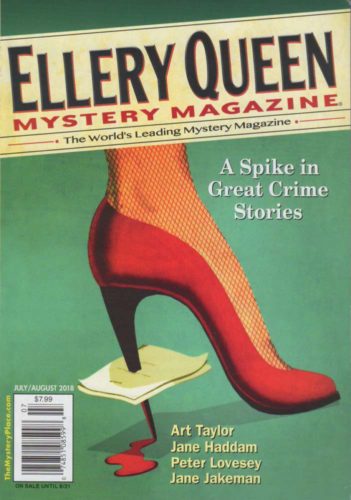
You’ll find eighteen outstanding stories in the July/August 2018 issue of Ellery Queen Mystery Magazine. (And what a great cover image by Brian Stauffer!) These talented authors, within the space of a few pages, will immerse you in the lives of their characters with their mind-bending dilemmas, relatable motives and desires. I’ve chosen seven of the stories here and offer one sentence on each. Shorts on shorts—no spoilers!

Mahadevi, by Jane Haddam

Hinduism and philosophical reflections on the nature of good and evil, the spiritual and material, distinguish this compulsively readable tale of sibling rivalry and familial discord.

Edgewise, by Louisa Luna

In this atmospheric story, the author’s laconic style and insight into human behavior subtly draws you into the essence of two lives, white and black, capturing their respective experiences of revenge, race relations, and policing.

English 398: Fiction Workshop, by Art Taylor

This multiple award-winning author successfully experiments with a non-linear structure, interwoven points of view, and a bit of valuable pedagogy in this humorous crime tale, a unique twist on a familiar aspect of college campus life.

The Mercy of Thaddeus Burke, by David Dean

Master storyteller David Dean makes you feel for his Irish mobster characters in their conflict over a generational changing of the guard, leaving you to ponder questions of competing loyalties.

The Professor, by Janice Law

There’s nothing obvious about this cleverly plotted, tightly written tale of deception and just deserts.

Hotel Story, by Sigrid Nunez

A reflective piece of flash fiction, the story taps a personal mystery each of us has experienced at one time in life.

Last Call, by Gemma Clarke

In “The Department of First Stories” of the magazine, this fiction debut impresses with its imaginative criminal design of stealth.

So, dive in and have fun! In addition to these stories, the issue includes stories by John H. Dirckx, Timothy O’Leary, Peter Turnbull, Marvin Kaye, Jane Jakeman, William Dylan Powell, Peter Lovesey, Thomas K. Carpenter, Amy Myers, François Bloemhof, and Alaric Hunt.

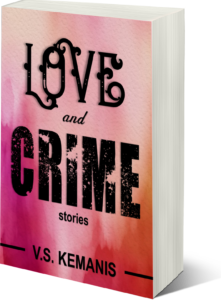
For more stories, check out my collection Love and Crime. Two of the eleven stories were first published in Ellery Queen Mystery Magazine.

Deep Zero Giveaway

Dana walks the tightrope like never before in her tricky balance between professional ethics and family loyalties.

Just a quick note to let you know that online magazine Kings River Life is running a giveaway for my Dana Hargrove novel, Deep Zero!  Click on the following link to find out how to enter: Review/Giveaway of Deep Zero.

While you’re over at Kings River Life, check out the book reviews, short fiction, and other interesting articles. This magazine originates in my home state, California, but its reach and subject matter are global. Here is the KRL vision statement: “We are a California magazine with local focus and global appeal, along with a desire to entertain, inspire and inform with a unique variety of articles that provide something of interest for everyone.”

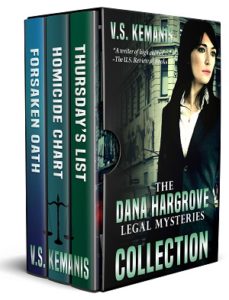
Once again, thanks to readers and reviewers for a great launch of Deep Zero.  If you haven’t read the first three novels, it’s easy to catch up with Dana’s world in the Dana Hargrove Legal Mysteries Collection, available at a discount in ebook and on Kindle Unlimited for free!
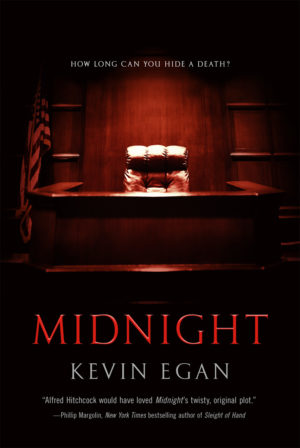
Legal Eagles, Attorneys Writing Fiction (4): Kevin Egan

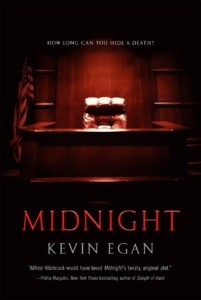
Midnight by Kevin Egan

I’m pleased to welcome author Kevin Egan to VBlog for this installment of Legal Eagles. I first met Kevin a few years ago at a meeting of the Mystery Writers of America, New York chapter. We soon discovered a few things we have in common. Not only are we attorneys who write crime fiction, we also have years of experience working for New York courts and judges. We know what it’s like to juggle a demanding legal career with a passion for fiction writing, squeezing the current work-in-progress into the cracks at either end of the workday and on weekends.

In our careers, we’ve both held positions as judicial law clerks. Don’t be fooled by the word “clerk.” This position is held by an attorney who works closely with a judge in a confidential capacity. While the degree of authority delegated to the law clerk varies from judge to judge, many law clerks exert considerable influence over the court’s decisions.

When Kevin explained the premise for his novel Midnight, I had to read it! The unique plot is built around the relationship between a law clerk and his judge in a setting I know very well, the courthouses in lower Manhattan. Unlike many crime novels, Midnight opens not with a murder but with the judge’s death from natural causes, which serves as the catalyst for a series of progressively serious crimes.

You won’t anticipate the many twists and turns in the domino spiral, set in motion by the slowly unfolding secrets of the characters and their conflicting motivations. Tom, the judge’s law clerk, is in debt to a loan shark and feels no serious ethical qualms in rewriting the judge’s opinions to buy his way out of trouble. Carol, the judge’s secretary, carries the financial and emotional weight of caring for her son and her mother while harboring secrets of past sexual affairs. A couple of court officers are anxiously awaiting the judge’s decision in a lawsuit that could abolish their overtime pay. Add to these characters the loan shark’s collection thug, a corrupt union boss, and a brutal mobster, and the resulting web of criminal intrigue spins out of control.

Fans of noir and legal thriller will thoroughly enjoy this compulsively readable tale of desperation and consequence. Legal details are deftly woven into the plot in a way that is easily understood without sacrificing accuracy. Midnight was a Kirkus Best Book of 2013 and is the first of three novels to feature the character Foxx, one of the court officers in the tale. You bet, I’ve put the next two novels on my “to-read” list! They are The Missing Piece (2015), and A Shattered Circle (2017), which received the coveted starred review from Publishers Weekly.

Welcome to VBlog, Kevin! I really enjoyed Midnight. How did you come up with your idea for this novel?

A law clerk and confidential secretary—the standard judicial staff in New York state courts—are personal appointments, which gives the judge free rein to hire and fire without an agency like the EEOC stepping in. However, if a judge dies or retires mid-term, an actual law—Judiciary Law § 36—determines the employment fate of the judge’s staff. It may be an oversimplification, but in dramatic terms, if the judge dies or retires, the staff keep their jobs until the end of that calendar year. So Midnight starts with a premise—what is the worst day of the year for a judge to die? Answer: New Year’s Eve. Tom and Carol’s plan to save their jobs for another year is simple enough: remove the judge’s body from chambers, place him in his bed in his apartment, then begin to “worry” about his failure to return to work until mid-day on January 2. But the plan turns out to be anything but simple.

Do you tend to write an outline first or just take the idea and run with it?

I have published 8 novels, and 7 of them have been written in the “take the idea and run with it” method. The lone exception is Midnight. Midnight first appeared as a short story in the January 2010 issue of Alfred Hitchcock Mystery Magazine. By that point, I was already working on expanding the premise into a novel. It was the only time I created a full outline, which I then followed with only minor deviations. The structure was rigid. It was to cover a period of four days, from December 31 to January 3. Each day presented a problem that Tom and Carol seemingly overcame by nightfall, only to have a more serious problem arise the next day.

Tell us a bit about works by K.J. Egan and Conor Daly. What went into your decision to use pseudonyms? Do you have any advice for writers on this subject?

My first book was a science fiction novel called The Perseus Breed. I started writing a sequel, but then switched to writing what would become a three-book golf mystery series. My agent insisted that I needed a pen name for the mysteries because, in her words, bookstores don’t want the same author on different shelves. And so Conor Daly was born. Having a pen name seemed problematic at the time, though I can’t recall any specifics other than a reader who persisted in writing letters to me as Conan Doyle.

Twelve years intervened between the last Conor Daly book and Where It Lies. By then, I decided to nudge my pen name closer to my real name. There also was a strategy. Since Where It Lies featured a first-person female narrator, I wanted a gender-neutral name on the cover. Using my initials filled that bill.

As for advice, I’ve come to believe that a pen name is a necessary evil. Publishers are much less patient with poor sales, and sales figures now hang onto an author like Jacob Marley’s chains. A pen name can offer a fresh start.

What’s next for you? Is another novel in the works?

I also write short stories. “The Movie Lover,” appearing in the July/August issue of AHMM will be my 26th published short story. I started this year on a short story tear, writing three in the month of January. As for novels, remember that science fiction novel I put down to become Conor Daly? I’ve returned to it.

Thank you for joining me on VBlog, Kevin!

Dear Reader, do you love legal thrillers? Pick up one of Kevin Egan’s books! Also, check out the other entries in the Legal Eagles series on VBlog to learn more about these attorneys who write crime fiction: Manuel Ramos, Allison Leotta, Allen Eskens, Adam Mitzner, Jerri Blair, Brian Clary, and of course, Yours Truly.

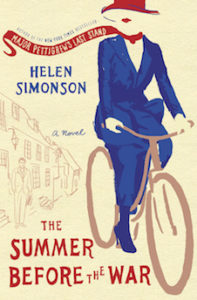
The Summer Before the War: Book Review and Conversation with Helen Simonson

For this installment of Fiction Favorites and Awesome Authors I share with you an outstanding read by the bestselling author of Major Pettigrew’s Last Stand, Helen Simonson.

Her second novel, The Summer Before the War, set in the idyllic English town of Rye in 1914, is beautifully written and meticulously researched. Much of the tale is a social comedy of manners, an insightful, if subtle, exploration of gender and class, full of wit, humorous dialogue, and masterful characterization. The traditions and biases of the upper middle-class are juxtaposed tellingly against those of the servant classes, Gypsies, a spinster schoolteacher, and impoverished war refugees from Belgium.

In 1914, gender equality is advancing in baby steps. Simonson aptly illustrates the status of women with several well-drawn characters, most prominently Agatha Kent and Beatrice Nash. The indomitable Agatha, married to a well-respected civil servant, is one of two women on the local school board. She takes the revolutionary step of seeking the board’s approval to hire a woman, Beatrice Nash, as Latin instructor. Beatrice is an independent woman in her early twenties, nearly penniless after her father’s death, unable to make ends meet on a meager inheritance controlled by patronizing trustees. The teacher position is bread and butter to Beatrice, but this reality clashes with Agatha’s tenuous position in recommending her. Agatha warns, “let’s not mention any such awkward necessity” as money when seeking board approval—better to emphasize “teaching as a service rather than a profession.”

Another “awkward” subject is Beatrice’s desire to become a published writer. Agatha tells her to keep this yearning under wraps because it would be “an absolute disaster for a lady in your position to earn a reputation as a bohemian.” Beatrice has no trouble following this advice the first time she’s introduced to Mr. Tillingham, a renowned novelist in Agatha’s social circle. When the subject of female writers comes up, the arrogant and pompous author says he has received “several slightly hysterical requests to read such charming manuscripts” and “would rather cut off my right hand” than read them. He gives the manuscripts to his secretary “to compose her own diplomatic replies and to consign the offending pages to the kitchen stove.” Later on, a publisher sends Beatrice a condescending missive, rejecting her proposal to publish an analysis of her father’s work. Ironically, the publisher has decided to commission Mr. Tillingham for the project!

Agatha is childless but is close to her two nephews, Hugh Grange, a young surgeon, and Daniel Bookham, a poet. Growing up, the cousins spent summers and school holidays in the Kent household. Their chosen professions foreshadow later events during the war. In these characters, we see the personal turmoil wrought by social convention and judgment: in Daniel’s case, discrimination against homosexuality, and in both characters, the pressure to forge marital unions based on class and status rather than love and compatibility. The relationships between the cousins and with their Aunt Agatha are the highlights of the novel, believable and emotionally compelling.

In the first part of the novel, the townspeople live in polite denial of impending war, as hints and irony foreshadow tragic events on the horizon. When spoken of, the war is romanticized as a great adventure. The son of a nobleman joins the Royal Flying Corps because he doesn’t want to enlist in “an ordinary war” and thinks that flying airplanes is “damned good fun!” To complete his image, he shops at Burberry’s because “they do a very good aviator helmet with goggles.” Marriageable young women launch a recruitment brigade, shaming any reluctant young man into enlisting by handing him a white feather (symbol of cowardice), along with a subtle bit of sexual bribery: no offer of marriage will be accepted unless the man is marching off to war. For a proper sendoff, the town hosts a parade with a brass band, displays “model trenches” on the fairgrounds, and tops it off with a grand ball.

The last part of the novel takes us to the front, into the real trenches and a battleground hospital. A strength of the narrative lies in the gradual loss of innocence of the main characters, the contrast between the naivety of their grandiose expressions of patriotism and the tragic reality they ultimately experience. The novel also touches on divided loyalties of family and nationality when the German husband of a British woman is called home for military service. This is an intriguing theme that is so wonderfully explored in William Burton McCormick’s book, Lenin’s Harem, which I reviewed here on VBlog.

Fans of historical fiction are sure to love Simonson’s sweeping novel full of colorful characters, scintillating dialogue, and insightful exploration of relationships during an era of great social change. In this video [click here], the author aptly sums up the major theme: the book is ultimately about “what you think is important to build in your lives, what remains when everything is falling apart, and more specifically, what is destroyed by war and what is burnished in the fire.”
And now, I welcome Helen Simonson to VBlog. Thank you for joining me, Helen! I loved The Summer Before the War, and Major Pettigrew is now on my ‘to-read’ list.

From a writer’s perspective, I have a few questions I’m dying to ask you, especially because our writing processes are apparently so different. In your videotaped presentation, you mentioned, “I don’t write what I know—I write to ask questions and explore them and hope to find some answers for myself.” The historical setting for your characters required painstaking research, yet an intuitive knowledge of human nature and social interaction underlies your characterizations. Do you feel that you write what you “know” on an emotional or personal level?

I try to write about the characters in my head and they seem to be real people to me.  What is funny is that on an emotional level I can see that I am using my characters to work out things that puzzle me about the world and about how we treat each other. Social comedy as moral philosophy?  I do also have great fun slipping in small personal details—like my grandfather’s name or a house I’d like to own in Sussex—but I am not writing autobiographically. I think books are wonderful because they allow us to travel to places we cannot go.  Writing a book is no different; every page is a new adventure for me.

You also mentioned that you don’t write an outline of the story first but create the characters and let them lead you where they want to go. Did you have a broad sense of the plot when you started out, or was this story a complete adventure of discovery along the way?

Simply following the characters around is a frightening way to write a work as long as a novel.  But now I’m in the midst of a third novel I have no idea where I’m going—again!  With The Summer Before the War, I knew World War I was coming but I did not know how we were going to go there.  It was a great relief to realize my surgeon, Hugh, would go and I could simply follow him to the hospitals and trenches of the Western Front.  I don’t recommend my way of writing but it forces one to noodle about, leaving room for literary themes to arise and be explored.  If I had a plot outline I’m afraid I might rush along too fast.

I wonder if you can place yourself in Beatrice’s shoes and imagine what it might have been like to face the prejudice against female writers, as depicted by the character Mr. Tillingham and the publisher that rejected her project. Given your evident talent and love of writing, do you think you would have been daunted in such an environment or would have persevered?

The more I wrote about Beatrice the more I wondered if we have really come as far as we thought in terms of women being free and equal.  The pay gap and the #metoo movement suggest we are still fighting for basic respect.  I would have been daunted then and I’m still daunted now.  No writer I know has escaped rejection, and since writing is an act of great vulnerability it can be very painful.  It was not hard to imagine Beatrice’s hurt.  Just the term ‘female writer’ carries its own put-down.  I was thrilled to discover, in taking intermediate French conversation lessons recently, that the French word for writer doesn’t carry a pronoun.  There is no ‘le’ or ‘la’ so in French I am fully a writer—Je suis écrivain.  It feels good!

And it feels good to read your work! Thank you for this insight into your writing, Helen. We look forward to your next novel!

Discovering America Travelogue: Road trip April 2018.

If you are of a certain age, you may remember being invited to the home of family or friends to watch slides from their recent vacation. You hear the click of the carousel in the dark. A detailed narration to go with each Kodak moment. Your thought: okay, next. You squelch a half-lidded yawn, your “Aah”s beginning to wilt. Don’t let this stop me from offering a carousel-less version of my recent, very exciting (to me) road trip. Be my captive or not—your choice. The projectionist’s insensitivity is now a matter of little consequence. Click, click goes the mouse.
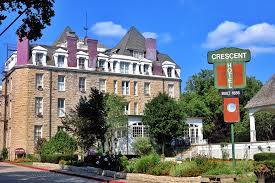
April 8-9: Eureka Springs, Arkansas. While visiting relatives in nearby Berryville, Arkansas, my husband and I stayed at the Crescent Hotel in the Ozarks. Built in 1886, this historic hotel is allegedly haunted. We searched but found no ghosts. A charming place, a bit uncomfortable, mostly because we were very cold due to the equally historic cold snap. Thirty degrees. High ceilings, inadequate heating. We did enjoy a delicious brunch in the hotel restaurant.

Crescent Hotel from a postcard. No leaves on the trees during our visit.
Crescent Hotel lobby

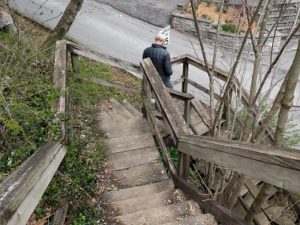
By day we explored Eureka Springs, “The Stairstep Town.” In the late 1800s, people flocked here for the reputed medicinal and therapeutic properties of the natural mineral springs. A blind woman was cured, along with other assorted miracles. Today: don’t drink or touch this water! There’s bacterial contamination from leaking sewers and corroded lead pipes. We walked just about every steep hill in this beautiful little mountain hamlet, a labyrinth of winding streets connected with stone and wood stairways.

Eureka Springs


We also happened to walk into the municipal court when it was in session and stayed around to hear a number of criminal arraignments and guilty pleas—better than fiction.

Eureka Springs Municipal Court


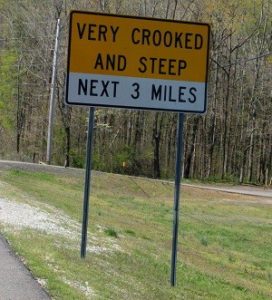
Morning-afternoon of April 10: Eureka Springs, Arkansas, to Memphis, Tennessee. We took Route 23 South, known as the Pig Trail Scenic Byway, through the Ozark National Forest. Stunningly beautiful (not to mention “crooked,” as you can see).

Sign on Route 23 Arkansas.


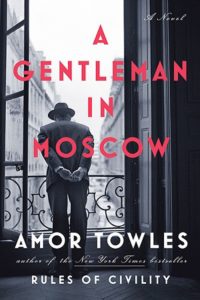
Then we hopped onto I-40. During these less-scenic interstate portions of our trip, we enjoyed A Gentleman in Moscow by Amor Towles, read by Nicholas Guy Smith. I highly recommend this audiobook.

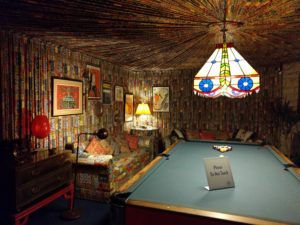
Afternoon of April 10: Graceland in Memphis. Off season, so a mere sprinkling of tourists. We took a shuttle from the huge, empty reception center to the much smaller house, not a mansion by current standards. I lapsed into a strange sadness looking at the gaudy 60s/70s décor, which falls far short of its intended luxury, listening to the prerecorded tour—a fantasy tale eerily devoid of negative information. According to the recorded tour guide, after a wonderful morning playing racquetball and singing at the piano with friends, Elvis retired to his bedroom, where he peacefully died at the age of 42. On the way out, I made myself happier by indulging in a huge bowl of ice cream at the candy shop. (If you go to Graceland, make room for the ice cream.)

Graceland living room

Who else but…?

The room with all the TVs and pillows and yellow

Pool room with amazing cloth-covered ceiling and walls

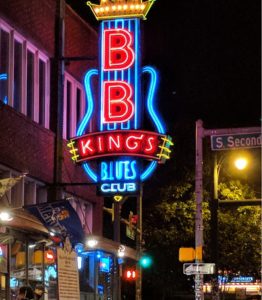
Evening of April 10: Beale Street in Memphis of course! So fun and uplifting. No problem getting a table. Saw Earl the Pearl Banks at Blues City Café and the King Beez at B B King’s. We had tasty BBQ ribs and shrimp. Love the blues!

Blues City Cafe

The King Beez

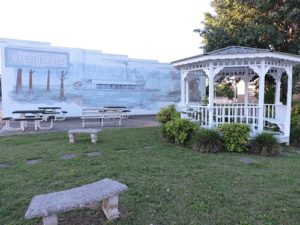
Day of April 11, Memphis to Nashville. Avoided the interstate and took scenic routes 64, 100, and 412, while the lady on Google Maps constantly tried to put us on a faster route. Stopped for picnic lunch on a table in this little area of downtown Decaturville Tennessee.

Decaturville TN (not very exciting)

Evening of April 11. Nashville’s Honky Tonk Highway, lower Broadway. Two blocks jammed with neon lights and music bars, blasting sound into the street. At each one, we stopped outside to listen for a few minutes, then went on to the next to experience another band, a different sound. We didn’t go inside—it was plenty loud in the street! And, I admit, my taste runs more to the blues of Beale Street than the country and honky tonk of Nashville’s Broadway.

Honky Tonk Highway, Nashville

Had a delicious dinner (no live music) at Merchants Restaurant, upstairs, looking out the window at the action on Broadway, below. Stopped off for ice cream (again!) at the fabulous Savannah Candy Kitchen. I was in heaven.

Merchants Restaurant

Get your candy and ice cream here!

Morning of April 12: The Hermitage, outside of Nashville. The home of Andrew Jackson and his slaves.

Hermitage

Hermitage slave cabin

Here, below, is the man who demonstrated the ritual of dueling. Yes, even then, presidents got away with murder, but without any need for a coverup.

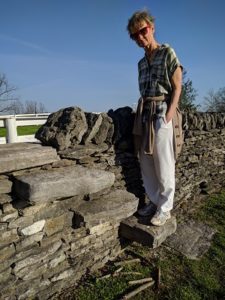
After the Hermitage, we drove to Lexington Kentucky, taking I-40 to TN-111 to US 127. In Kentucky, we crossed the Cumberland River Dam and saw many beautiful rolling green hills with white fences and horses grazing. Got to Shaker Village just before sunset and enjoyed looking at the wood frame houses and dry stone walls (a favorite of my husband, who is a skilled dry stone waller).

Shaker Village

Stone wall at Shaker Village

Shaker Village

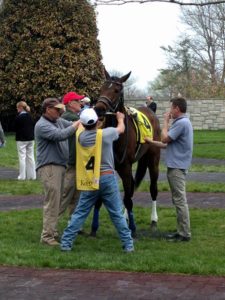
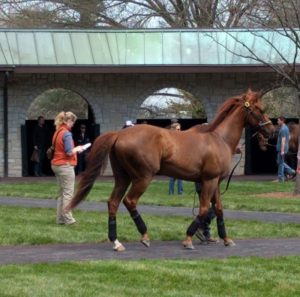
Morning-afternoon of April 13: Drove to the Keeneland racecourse. This place is huge, hill after hill of parked cars. I was seriously underdressed. Ladies, at the races you should wear a dress, heels, and a big hat. Teen girls must be in the shortest possible miniskirts, wearing tons of makeup. We wondered why every teenager in Kentucky was there and learned that the schools had closed for a teachers’ rally to protest changes in their pensions. On the first race, we placed $2 bets to win on two horses and one of them came in first! Awestruck it was! (the horse’s name). Paid a big $4, so we came out even. We left the races and drove to Lexington Virginia on Route 64, off and on scenic, arriving at 8 p.m., tired.

Men at Keeneland doing something with this horse

Warm-up before the first race

Morning of April 14: Home of Thomas Jefferson, Monticello, Charlottesville, Virginia. Jefferson loved gadgets, and his house was full of them. I loved the clock with the huge metal weights that dropped to the day of the week, and the dumbwaiter exclusively used to lift bottles of wine from the basement to the bright yellow dining room (Jefferson was a wino). Did I promise a meaningful history lesson with this travelogue?

Monticello

Afternoon of April 14: Took scenic Skyline Drive along the Blue Ridge Mountains in Shenandoah National Park, Virginia. A winding drive at 35 miles per hour, 3-1/2 hours from the south entrance/exit to the north entrance/exit at the town of Front Royal. No leaves on the trees. Beautiful nonetheless. We made several stops to enjoy the view. I drove the whole way to avoid car sickness!

Skyline Drive

April 15: Drove from Front Royal, VA, home to Cortlandt Manor, NY. Interstate all the way, immersed in our audiobook, looking forward to home, sweet home!

White Plains: Book Review and Conversation with Author David Hicks

“When it comes right down to it, I’ve decided, almost every relationship involves two people with intense insecurities masked by whatever behavior it takes to keep those insecurities from being exposed, while at the same time revealing their equally desperate need to have them exposed, even embraced.” – from White Plains

White Plains by David HicksI’m pleased to welcome David Hicks to VBlog for this installment of Fiction Favorites & Awesome Authors. His debut novel White Plains is the story of a young man’s search for himself. We first meet the protagonist, Flynn Hawkins, when he’s twenty-two, a graduate student and teaching assistant in the English department of a fictional New York college. In the final chapter, we see Flynn at age forty, just beginning to internalize some valuable life lessons. He has taken a big step closer to self-knowledge, openness, and honesty with himself and others, but he still has a distance to travel.

Flynn’s journey is told in a series of connected stories from different viewpoints. As a fan and writer of short fiction, I relished each chapter as a standalone piece of great writing. Many of the chapters were previously published in literary journals. Most are told from Flynn’s viewpoint, in first person or third person, and several others are told by the people in Flynn’s life: a professor, a close male friend, a high school coach, Flynn’s sister, wife, son, and daughter. This technique renders the most fully-drawn character I’ve seen anywhere.

The stark contrast between Flynn’s perception of himself and how others see him is a variation on a theme that intrigues me and is woven into my courtroom fiction: what is truth or reality but a set of widely varying, subjective points of view? At a criminal trial, ten witnesses will describe the same event ten ways, often inconsistently. In the context of personal relationships, the inability to appreciate the impact of one’s behavior on others can be self-destructive. Flynn’s story, as told from different viewpoints, serves as a wake-up call for the need to step outside oneself as a means of self-examination.

What did I think of Flynn? I flip-flopped between loving and hating him, losing all respect for him and regaining it. He tries so hard that I wish him well. I don’t count my wildly shifting feelings for him as a detraction from the quality of the read. Quite the contrary. This book draws you in. There’s intensity, wit, depth, tenderness, and beauty in the prose. The good and the bad—that’s what makes a complete person. Throughout Flynn’s journey, dear reader, you are going to feel a lot of emotion, and that’s the stuff of great fiction.

I enjoyed this book right through to the last paragraph of the afterword. The author acknowledges his family for co-authoring the story of his life, “which, thanks mainly to them…, seems to be building towards a happy ending. May it, like the final chapter of this book, be just a tad too long.” The last chapter of the book may be the longest, but for me, it was the best. After all the ups and downs, I was glad to see, at last, that Flynn made some real progress in his quest for self-actualization. The people in his life are going to start feeling a whole lot better about him too.

And now, I’m happy to welcome David Hicks to VBlog. Thank you for joining me!

It’s my pleasure! A big hello to all your readers.author David Hicks

White Plains is a resonant work of art. Tell us about its conception and your process. Did the project start as a single short story that begged to be expanded, or did you plan a novel in the form of linked short stories from the start?

Neither! I was just going about my business as a short story writer, publishing in some wonderful literary magazines, when I decided I had enough stories for a collection. Most of my published stories are somewhat autobiographical—I tend to write about times in my life when something shifted for me—and while I was at an artists’ residency in Wyoming I made it my goal to put the stories together in book form. I tried out different arrangements, but it was when I experimented with putting the stories in chronological order (not according to their publication dates but according to the main character’s life) that I realized it could be a novel instead of a collection—there was, in other words, an overall conflict, crisis, and resolution to the whole book. But since it wasn’t written as a novel, I now needed to revise it as a novel, and that meant “filling in the gaps” of the overall narrative. I did that by adding chapters from other characters’ points of view. (I got that idea from a wonderful book called The Last to Go by Rand Richards Cooper.) After that, it felt more like a novel, and I felt justified pitching it as such.

Some of the chapters from Flynn’s point of view are written in first person and some are written in third person. How did you decide which to use?

As a general rule, when I write something that’s a little too autobiographical, I write in third person. It gives me a little distance from myself. I am able to say, “Wow, look at you, what the hell were you thinking when you did that?” And it also helps me to craft my real-life event as a story rather than emotionally “dumping” onto the page. And when it’s not very autobiographical, I narrate in first person, to force myself into a more intimate voice. It also depends on the situation: for example, the chapter that shows when everything changes for young Flynn—when he’s living in Manhattan during 9/11—was originally written in second person (my editor advised me to change it to third person), because it evokes the kind of shell-shocked feeling that seems appropriate for the subject matter.

Do you consider Flynn a reliable narrator? Tell us about your decision to incorporate other voices.

Absolutely not—he’s completely unreliable, especially at first. (Towards the end, he becomes more reliable.) Isn’t that how we all are? And that’s what we like; we like hearing unreliable accounts of events from our friends and family. (How many of us, when hearing a friend’s story of an argument with their spouse or a terrible boss, actively set about contacting the spouse or boss to get a fair version of the story?) It’s the same when we read. Think of Nick Carroway in The Great Gatsby (who has very little idea what has really happened during key scenes), or Dostoevsky’s narrator in Notes from Underground (who’s view of himself and others is irreparably distorted)—we enjoy it when narrators “tell the truth but tell it slant.”

One of my favorite chapters, a very suspenseful one, involves Flynn driving through a snowstorm and getting stranded in the Colorado Rockies. Did you have a similar experience that informed this scene?

That’s a good example of what I was talking about earlier: I wrote that story in third person because it’s almost one hundred percent autobiographical. For two years I lived in one of the most beautiful places in the country, but it’s also quite remote. I got a teaching job over four hours away and proceeded to “commute” there via an isolated route that traversed several mountain passes. I had no money (I was giving my ex-wife the bulk of my paycheck for child support), so I was driving on bald tires, and one week we got some serious snow and I almost died, both on the way there and on the way back. But at my worst moment, stranded in my car in a snowbank, I stepped out at four a.m. and witnessed a spectacular meteor shower in the clear night sky. And after that, I knew what I needed to do.

Do you have another novel planned or in the works?

I’m currently finishing a novel called The Gospel According to Danny, about the death of America as told by a waiter in Yonkers. It’s quite different from White Plains in that it’s a long, linear narrative with many dramatic events. I’m in love with it, but it’s been a very difficult novel to write, so I can’t wait to send it off to my agent.

Thank you for these illuminating insights, David!

Dear reader, to learn more about David Hicks and White Plains, visit his website by clicking here. To pick up a copy of White Plains, click here.